Executive Summary: This case study profiles a Construction & Demolition (C&D) recycling operation in the environmental services industry that reduced loader incidents by implementing Problem‑Solving Activities supported by AI‑Powered Role‑Play & Simulation. Crews practiced spotter‑operator coordination in realistic, dynamic scenarios—reversing near piles, navigating blind spots, and managing mixed traffic—which built shared language, faster hazard recognition, and safer decisions without slowing production. The article covers the initial challenge, the strategy and rollout, measurable results, lessons for scaling to other high‑risk sites, and the estimated cost and effort to implement a similar solution.
Focus Industry: Environmental Services
Business Type: Construction & Demolition Recycling
Solution Implemented: Problem‑Solving Activities
Outcome: Reduce loader incidents via spotter simulations.
Cost and Effort: A detailed breakdown of costs and efforts is provided in the corresponding section below.
What We Built: Elearning custom solutions
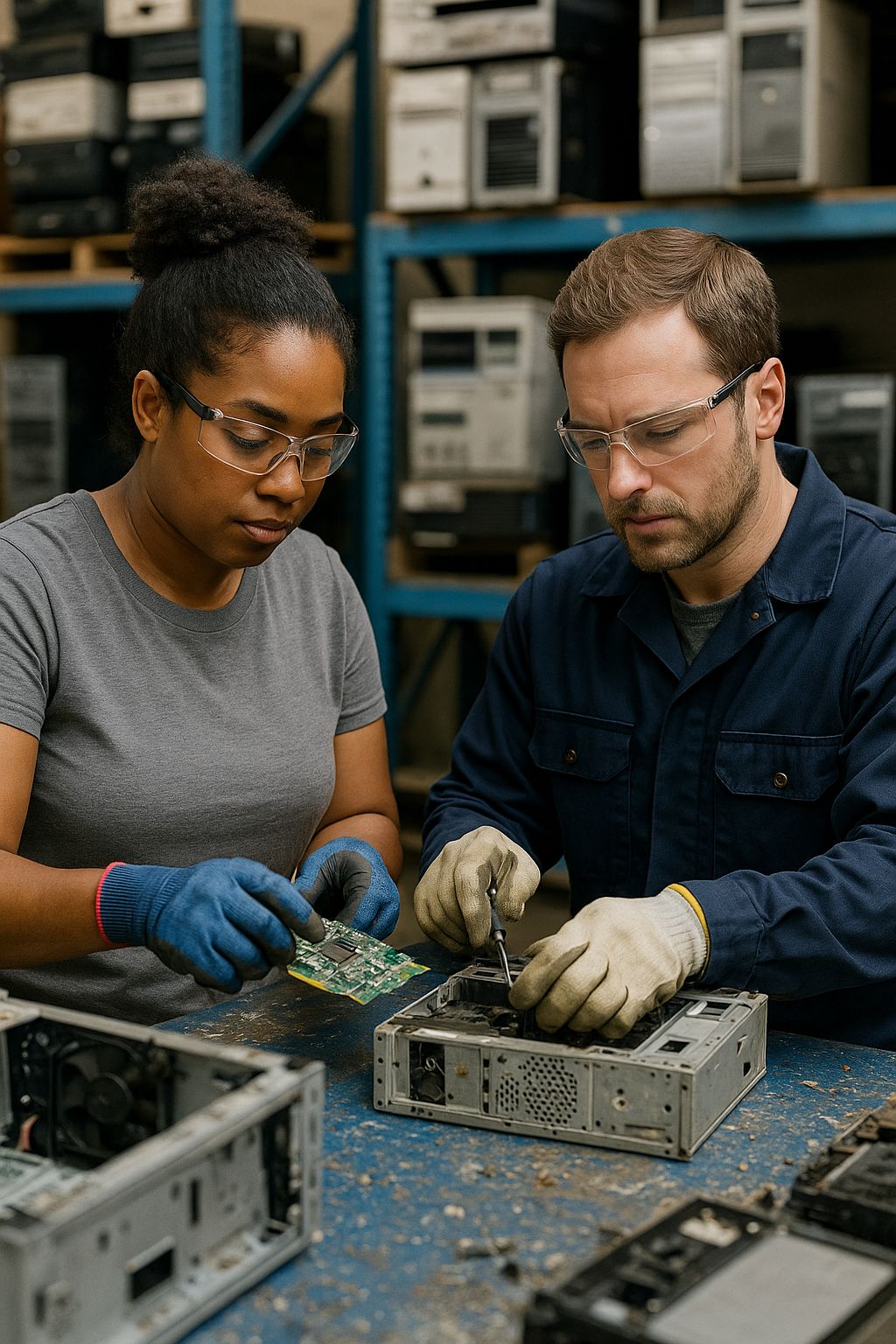
This Construction & Demolition Recycling Operation in Environmental Services Faces High-Stakes Safety Risks
Construction and demolition recycling is a busy corner of environmental services. The business takes in debris from jobsites, sorts it, and sends clean material like wood, metal, and concrete back into use. The yard runs long hours. Trucks arrive and leave. Loaders feed stockpiles and conveyors. People move between tasks. Everything happens in tight spaces.
- Heavy loaders move tons of material, often in reverse
- Blind spots hide people and hazards behind piles and containers
- Mixed traffic brings together trucks, forklifts, visitors, and pedestrians
- Dust, mud, rain, glare, and noise make it hard to see and hear
- Pile size and yard layout change throughout the day
Spotters help keep this flow safe. They guide loader operators with hand signals and radio calls. It works only when both people share the same cues and act at the same time. A missed call or a misunderstood signal can put someone in harm’s way in seconds.
The stakes are high. One loader incident can injure a teammate, damage equipment, and halt a line. It can trigger investigations, raise insurance costs, and slow service to customers who count on fast turnaround. It can also affect permits and the trust of the community that lives next to the facility.
The workforce is a mix of seasoned operators and new hires. Some speak different first languages. Shifts are long, and the pace picks up when inbound loads spike. Quick onboarding and clear communication matter. So does confidence to speak up when a risk appears.
Leaders saw a pattern of near misses and minor hits around loaders, often during reversing and tight turns near active piles. Toolbox talks and slide decks helped with rules, but they did not match the chaos of the yard. People needed safe practice that looked and felt like real work, where they could test choices, fix mistakes, and learn how to read the scene together.
This is the context for the change that follows. The goal was simple and urgent: cut loader incidents and protect people without slowing the operation.
Loader Incidents and Communication Breakdowns Create an Urgent Challenge
Loader incidents were not random. They often happened during reversing near active piles, at the load out area, and at tight turns where sight lines were poor. In review, the same theme showed up again and again. The operator and the spotter did not share the same picture of the move, or a clear plan for how to make it safe.
- Signals were not consistent across crews, and some hand cues were easy to miss with gloves or rain gear
- Radio calls got stepped on by noise, dead spots, or low batteries, and key words were not standardized
- Blind spots around the bucket and stockpiles hid people and vehicles
- Yard layout shifted through the day, so old habits did not fit new traffic patterns
- New hires joined fast, with different experience levels and first languages
- Fatigue during long shifts made attention and timing slip
Existing training set the rules but did not change behavior under stress. Orientation, posters, and toolbox talks told people what to do. They did not let teams practice how to read a messy scene, pick the right move, and speak the same short phrases in the moment. There was no safe way to try a decision, see the result, and adjust.
- No shared phrase list for start, stop, and clear
- No quick pre move check to confirm roles and path
- No practice with bad weather, glare, or shifting piles
- No feedback loop that tied choices to outcomes
The cost was real. Even a minor bump damaged buckets, doors, or tires. Downtime rippled through the yard and delayed customer service. Insurance and repair costs rose. Morale dipped after close calls, and new workers lost confidence. Supervisors spent time on investigations instead of coaching.
The challenge was urgent. The team needed crisp, shared communication and faster hazard recognition. They needed practice that felt like the yard, with changing conditions and real pressure, so both spotters and operators could build the same mental model and act as one.
A Strategy Centered on Problem-Solving Activities and Realistic Simulations Builds Safer Habits
The team set a clear aim: cut loader incidents without slowing the yard. The plan put hands-on problem solving at the center. People would practice the moves that matter most in scenes that feel real. They would switch roles, call the play, and see what happens when a call is late or the path is not clear. Try, see, adjust, and try again.
- See hazards early and name them out loud
- Use the same short words and signals every time
- Decide and act together with a simple pre move check
- Get quick feedback and build one small win at a time
Instead of long classes, the strategy used short, frequent practice. Crews ran quick drills during start of shift huddles and before high traffic windows. Each drill set up a real scene such as a reverse near a pile, a truck entering the lane, or a pedestrian stepping into view. The group had to spot risks, agree on the path, and use the same phrases to move the machine or call a stop.
- Daily micro drills kept skills fresh in five to ten minutes
- Weekly scenario labs let crews rotate through spotter and loader roles
- A three part pre move check focused on path, people, and plan
- A short phrase list went on cab stickers and pocket cards
- Two minute debriefs after each run asked what went well and what to change
Realistic simulations raised the challenge step by step. Once a team handled a clean scene, new twists came in. A cone blocked part of the line of sight. A second truck entered. Noise made a call hard to hear. Rain or low light changed what people could see. Crews learned to scan, speak up, and pace the move as one unit.
Leaders backed the plan with time and presence. Supervisors joined drills, modeled the standard calls, and praised clear stops. Safety leads pulled in near miss data to shape the next set of scenes so practice matched real yard patterns.
This approach built habits, not just knowledge. Repeated, focused practice made the right calls feel natural. Shared language cut confusion. Fast feedback kept energy high. Over time, crews grew more confident and more aligned, which set the stage for safer shifts.
AI-Powered Role-Play & Simulation Drives Spotter-Operator Problem-Solving Drills
To power the drills, the team used an AI‑Powered Role‑Play & Simulation tool. It let crews practice spotter‑operator moves in scenes that felt like the yard, without risk. The simulations mirrored blind spots, reversing moves, mixed truck and pedestrian traffic, and tough conditions like noise, rain, mud, and glare. Learners switched roles from run to run so both the spotter and the loader point of view became familiar.
In each session, the learner spoke radio calls or used hand signals. The AI played the other role and the environment and reacted in real time. Clear, timely calls led to a smooth move. Late or unclear calls made the scene harder and showed likely consequences. People could see how a choice changed the risk picture and how a better call changed it back.
- Reversing near an active pile with shifting sight lines
- A truck entering the lane while a move is in progress
- A pedestrian stepping into view at the edge of a pile
- Radio noise, low batteries, or wind masking a key word
- Rain or low light reducing depth and contrast
Practice cycles were short and focused. Most runs took five to ten minutes. After each run, the tool gave a quick debrief that showed the timing of calls, where attention dropped, and one or two simple changes to try next. Learners could hit retry right away, or replay the scene from a different angle to catch what they missed.
- An on‑screen phrase list kept start, stop, and clear wording consistent
- A simple overlay reminded people of the standard hand signals
- Audio and captions supported multiple languages
- Weather and noise toggles let crews practice in harder conditions
Supervisors used the AI summaries to coach. The tone stayed supportive and practical. Patterns across runs shaped the next week of drills, so practice always matched real yard trends. The tool flagged common issues like late hazard calls near busy lanes, mixed wording across crews, and radio overlap. This turned data into small coaching moves that teams could try the same day.
The setup fit the rhythm of work. Crews ran a scenario during start‑of‑shift huddles or before a high‑traffic window. No special gear was needed. A tablet or a desktop was enough to launch, practice, debrief, and try again. Over time, people built a shared picture of risk and a shared language for how to move together, which set up the results that follow.
The Simulations Mirror Blind Spots Reversing Maneuvers and Mixed Traffic to Strengthen Hazard Recognition
The biggest shift came from teaching people to read the yard like a story. The simulations felt real and kept changing, so learners had to spot small cues, say them out loud, and choose a safe move together. By mirroring blind spots, tight reversing, and mixed traffic, the tool turned hazard recognition into a simple, repeatable habit.
Blind spots are not just empty space. They hide motion. The AI scenes made those gaps easy to see and name, so crews learned where to look first and what each clue might mean.
- Stockpiles and containers blocked sight lines and hid pedestrians at corners
- The loader bucket and arms cut off mirror views during turns and backing
- Dust and glare masked movement until a vest or beacon flashed at the edge
- Parked trailers and idle trucks created shadowed pockets where people could stand
- Camera views helped but never showed the full picture, which reinforced the need to scan
Reversing was a core focus. Many incidents started with a simple back-up that turned complex. The simulations showed how the angle of the loader and the height of the pile change what both people can see. They taught a steady cadence that slowed the scene down and raised confidence.
- Pause, scan left-center-right, and call the plan before the first move
- Keep the bucket low enough for sight, then creep instead of lurch
- Stop at pre-set points to recheck the path and confirm “clear”
- Watch tail swing and tire path, not just the bucket
- End with a final stop and “all clear” so the next task starts clean
Mixed traffic made the practice real. Trucks arrived mid-move. A forklift crossed the lane. A visitor wandered near the pile. Wind, rain, or engine noise stepped on a key word. The AI reacted to each choice, so the team saw how a clear stop or a fast correction prevented a close call.
- A haul truck turned wide into the lane during a reverse
- A pedestrian stepped out from behind a container at the last second
- Radio overlap hid the word “stop” and forced a hand-signal backup
- Rain and low light cut depth perception and stretched braking distance
Each run built the same simple skills until they felt natural.
- Spot then speak: name the hazard out loud so both people share the same picture
- One language: use the same short words for start, stop, and clear across all crews
- Pre-move check: path, people, plan before any motion
- Short moves: move, stop, confirm, then move again
- Trust but verify: use mirrors and cameras, then do a fresh scan
After each scenario, a fast debrief showed what was seen, what was missed, and the timing of each call. Learners picked one change to try and hit retry right away. With practice in different weather, light, and noise settings, teams learned to notice sooner, speak clearer, and steer the same safe path together.
The Solution Integrates Into Daily Huddles and Yard Walks for Rapid Practice and Feedback
The team made practice part of the workday. Instead of adding long classes, they folded short drills into daily huddles and yard walks. The goal was simple. Start the shift with a shared plan, rehearse the tough moves in minutes, and leave with one clear improvement to try on the floor.
- At start of shift, a supervisor launched a five to seven minute scenario on a tablet
- Two people took turns as spotter and loader while the crew watched and listened
- The scene matched the day’s risks, like rain or a busy load out lane
- A one minute debrief followed. What worked. What to try next. Then back to work
Yard walks turned into live walk and talk rehearsals. Crews paused at high risk spots and practiced the same calls they used in the simulation. Cones marked blind corners. Chalk lines showed tail swing. People learned to slow the move, confirm the path, and reset when anything felt off.
- Check radio channel and batteries before the first move
- Run a quick pre move check on path, people, and plan
- Practice hand signals in gloves and rain gear to test visibility
- Agree on stop points and where to stand for a clean line of sight
The setup was light and fast. A QR code on the huddle board opened the day’s scenario. Pocket cards and a cab sticker kept the phrase list close. Captions and audio helped crews who spoke different first languages. No special gear was needed. A tablet or desktop was enough.
- One tap to pick a scene that fits the yard right now
- Weather and noise toggles to raise or lower difficulty
- Instant retry so people could test a new call right away
Coaching stayed positive and specific. Supervisors used the AI summary to point to one or two moments that mattered, like a late hazard call or mixed wording. Crews celebrated a clear stop as a win. Near miss notes fed next week’s drills so practice always matched real patterns.
- Rotate roles so everyone feels both the spotter view and the loader view
- Call out good catches and clean stops in the moment
- Keep a simple board with the phrase of the day and one focus habit
New hires joined a buddy for their first week and ran a short scenario before any complex move. This built comfort fast and set a clear standard from day one.
By weaving drills into huddles and walks, the team turned safety into a daily rhythm. People practiced, got feedback, and tried again in minutes. The yard kept moving, and the habits got stronger with every shift.
Loader Incidents Decline and Safety Culture Strengthens Across the Operation
Results showed up on the yard and in the reports. Crews made cleaner calls and stopped sooner when the picture was not clear. Loader incidents trended down. People felt safer and more sure about the next move.
- Fewer loader bumps and scrapes around piles and containers
- Fewer close calls during reversing near active lanes
- More early stop calls that broke a chain of risks
- Stronger use of the standard phrase list and hand signals
- Better radio habits with fewer stepped-on calls
- Less downtime for minor repairs and inspections
- Faster ramp-up for new hires who practiced before complex moves
At the same time, the culture shifted. A clean stop was a win. Speaking up was normal. Debriefs were short and blame free. Leaders stayed close to the work and asked what would make the next move safer.
- Crews shared near misses early so others could avoid the same trap
- Spotters and operators swapped roles to build a shared view of risk
- Supervisors used AI debrief notes to pick the next drill with purpose
- Quick shout-outs for good catches kept energy high
- Simple standards held across shifts so everyone worked the same way
The biggest sign of progress was consistency. No matter the shift or crew, the words, signals, and pace matched. The habits from practice showed up in real moves. The line kept moving, risk went down, and people ended the day with more confidence.
Lessons Learned Help Executives and L&D Teams Scale the Approach in High-Risk Environments
This playbook scales to any site where heavy equipment and people share space. The win came from building habits through short, real practice that fit the workday. The AI-Powered Role-Play & Simulation tool gave teams a safe place to try moves, make mistakes, and fix them. Leaders protected a few minutes for drills. Crews left each session with one clear change to try on the floor.
- Start where risk is highest: pick two or three moves that drive most close calls
- Make it real: mirror your yard layout, blind spots, and weather inside the simulations
- Set the same words and signals: a short phrase list and a simple hand-signal chart for all crews
- Switch roles: rotate spotter and operator so both sides see the same picture
- Coach one thing at a time: give one tip, retry, and celebrate the clean stop
- Feed practice with field data: use near misses and AI debrief notes to shape next week’s drills
- Plan for language access: support captions, clear audio, and visuals so everyone can engage
- Keep the tech simple: run on a tablet, quick load, no extra gear
Executives can help by tying the effort to business results. Fewer incidents cut repair costs and downtime. Clear stops protect people and keep service steady. Your visible support matters. Show up for a drill. Praise a clean stop. Fund good radios, batteries, and high-visibility gear.
- Week 1: map top risks, agree on the phrase list, and define a three-step pre move check
- Week 2: launch daily five to seven minute simulations in huddles, rotate roles, and debrief fast
- Week 3: add weather and noise to raise difficulty, run yard walks to rehearse the same calls in place
- Week 4: review AI summaries and near misses, tune scenarios, and share two wins across shifts
Track a few simple signals to see progress and guide coaching.
- Loader incidents and near misses trend down
- More early stop calls that break a chain of risk
- Consistent words and hand signals across shifts
- Fewer stepped-on radio calls and faster confirmations
- New hires reach safe solo work faster
This approach travels well to transfer stations, material recovery facilities, warehouses, quarries, and ports. Anywhere machines, trucks, and people mix, the same pattern holds. Keep practice short and frequent. Reflect the real scene. Use one language. Coach in the moment. Build wins that teams can repeat under pressure.
The last lesson is focus. Do fewer things well. Protect time for drills. Show people that a clear stop is success. With steady leadership and simple tools, safer habits grow and stick.
Guiding the Fit Conversation for Problem-Solving Simulations in High-Risk Operations
In a Construction & Demolition recycling operation, the biggest risks lived where people and heavy machines shared tight space. Loader incidents often happened during reversing near piles, in mixed traffic, and in poor weather or low light. The core issue was coordination. Spotters and operators did not always share the same picture or language in the moment. Rules on posters were not enough to change behavior under pressure.
The solution put hands-on problem solving at the center and used an AI-Powered Role-Play & Simulation tool to make practice feel like real work. Crews ran short, repeatable scenarios with blind spots, mixed traffic, and tough noise or weather. They switched roles, used one phrase list and set hand signals, and got instant debriefs tied to their decisions. The drills fit into daily huddles and yard walks, so practice stayed close to the job. Results included fewer loader incidents, clearer hazard calls, faster onboarding, and a stronger safety culture.
If you are considering a similar path, use the questions below to guide your decision.
- Do your top risks come from human-to-machine coordination, such as reversing, blind spots, and mixed traffic?
Why this matters: This approach shines when incidents happen because two people must see the same scene and act together in real time.
What it reveals: If most events come from equipment failure, poor maintenance, or isolated tasks, start there first. If close calls cluster around backing, lane merges, and confused signals, simulations and problem-solving drills are a strong fit.
- Will supervisors protect 5 to 10 minutes for micro-drills and model the standard on every shift?
Why this matters: Short, frequent practice builds habits. It only works if leaders make time for it and show what “good” looks like.
What it reveals: If time is too tight or leaders cannot join, start with one crew or one high-risk window and prove the value. Without visible support, adoption will stall.
- Can you set one simple language and signal set across all crews and first languages?
Why this matters: Simulations reinforce what you standardize. Clear words and hand signals make practice transfer to the yard.
What it reveals: You may need a short phrase list, a hand-signal chart, translations, and pocket cards or cab stickers. If crews use mixed wording, fix that first or in parallel.
- Do your teams have basic access to tablets or desktops, and a plan for audio, captions, and noisy conditions?
Why this matters: The tech footprint is small, but it must work fast in real settings. Good audio and captions help multi-language crews.
What it reveals: If connectivity is spotty, preload scenarios or run from a local device. If noise is high, lean on captions and visual cues. If devices are scarce, rotate through squads and pair with tabletop walk-throughs.
- Can you track a few leading and lagging signals and feed that data back into next week’s drills?
Why this matters: Data keeps practice relevant and proves value. Near misses, late calls, and radio overlaps point to the next drill.
What it reveals: If you lack a baseline, start now with simple counts: early stop calls, stepped-on radios, reversing close calls, and minor loader contacts. Use the AI debrief notes or a simple log to tune scenarios and show progress.
Answering these questions with honesty will show fit, timing, and scope. If the signals point to “yes,” start small in the highest-risk lane, protect time for daily practice, and share early wins. If the signals point to “not yet,” shore up standards, leadership support, and basic tech first. In both cases, keep the goal simple: help people see the same scene, speak the same words, and move together safely.
Estimating Cost And Effort For AI-Powered Problem-Solving Drills In C&D Recycling
This estimate focuses on what it takes to stand up AI-powered spotter-operator drills in a Construction & Demolition recycling yard. The goal is to build safer habits fast, with short simulations and field practice that fit daily huddles and yard walks. Costs below reflect a single mid-size site over a 12-month period, including a 90-day rollout and ongoing support. These are illustrative market estimates, not vendor quotes; adjust for your rates, headcount, and policies.
Assumptions Used For Sizing
- One site with about 50 frontline workers and 6 supervisors across shifts
- 12 to 16 simulation scenarios tailored to local risks
- Daily micro-drills in the first 90 days, then regular refreshers
- One additional language for captions and job aids
- Light tech footprint: a few tablets, existing radios, basic Wi-Fi
Key Cost Components Explained
- Discovery and Planning: Map top risks, align on a standard phrase list and hand signals, define a simple pre-move check, and confirm success metrics.
- Learning Design: Turn risks into practice-ready scenarios and micro-drill templates; craft the flow for role switches, debriefs, and quick retries.
- Simulation Authoring: Build the scenarios inside the AI tool, set difficulty toggles for weather and noise, and wire in phrase prompts and signal guides.
- Translation and Accessibility: Translate the phrase list, captions, and quick-reference job aids; check clarity for all crews.
- Job Aids and Printing: Pocket cards, cab stickers, and a small huddle-board kit that keep language and steps visible.
- Technology and Devices: Annual license for the AI simulation tool; a few shared tablets; radio accessories and spare batteries to support clear calls; Wi-Fi extenders if needed.
- Light Integration and Setup: Device provisioning, links or QR codes for easy launch, user access, and privacy settings.
- Data and Analytics: Set up a simple dashboard and logging so near misses and debrief notes shape next week’s drills.
- Quality Assurance and Safety Sign-Off: Operator walk-throughs to validate realism; safety review to confirm alignment with policy and OSHA standards.
- Pilot and Iteration: A short pilot with real crews; collect feedback; tune wording, pacing, and stop points.
- Deployment and Enablement: Train-the-trainer sessions, facilitator guides, and shift coverage so every crew can run drills.
- Change Management and Communications: Brief leaders, post a simple launch message, and recognize early wins.
- Frontline and Supervisor Time (Opportunity Cost): The investment in 5–10 minutes of practice, plus supervisor facilitation and debriefs, during the 90-day build phase.
- Ongoing Support and Updates: Monthly scenario tuning based on incident data and seasonal changes.
| Cost Component | Unit Cost/Rate (USD) | Volume/Amount | Calculated Cost (USD) |
|---|---|---|---|
| Discovery & Planning (L&D) | $120 per hour | 24 hours | $2,880 |
| Discovery & Planning (Safety Manager) | $90 per hour | 8 hours | $720 |
| Discovery Interviews (Operator SMEs) | $35 per hour | 12 hours | $420 |
| Learning Design For Drills & Checklists | $120 per hour | 40 hours | $4,800 |
| Simulation Authoring In AI Tool | $120 per hour | 32 hours | $3,840 |
| Translation & Captioning | $0.20 per word | 3,000 words | $600 |
| Job Aids & Printing (Cards, Stickers, Posters) | $350 per site bundle | 1 bundle | $350 |
| AI Simulation License | $6,000 per site-year | 1 site-year | $6,000 |
| Tablets (Rugged or Cased) | $600 per tablet | 4 tablets | $2,400 |
| Radio Headsets & Spare Batteries | $200 per set | 8 sets | $1,600 |
| Wi-Fi Extenders / Connectivity | $150 per unit | 2 units | $300 |
| Light Integration & Setup | $120 per hour | 8 hours | $960 |
| Data & Analytics Setup | $120 per hour | 6 hours | $720 |
| QA Scenario Testing (Operators) | $35 per hour | 16 hours | $560 |
| Safety Sign-Off | $90 per hour | 4 hours | $360 |
| Pilot Facilitation (L&D) | $120 per hour | 12 hours | $1,440 |
| Pilot Participation (Supervisors) | $45 per hour | 24 hours | $1,080 |
| Post-Pilot Scenario Tuning | $120 per hour | 8 hours | $960 |
| Train-The-Trainer Sessions (L&D) | $120 per hour | 12 hours | $1,440 |
| Shift Coverage For Training (Frontline OT) | $52.50 per hour | 40 hours | $2,100 |
| Leader Briefings & Change Communication | $150 per hour | 4 hours | $600 |
| Launch Communications & Signage | Per site | Lump sum | $300 |
| Frontline Micro-Drills (Opportunity Cost, 90 Days) | $35 per hour | 250 hours (50 workers × 5 hours) | $8,750 |
| Supervisor Facilitation (Opportunity Cost, 90 Days) | $45 per hour | 60 hours (6 supervisors × 10 hours) | $2,700 |
| Ongoing Support & Scenario Updates (Months 4–12) | $120 per hour | 36 hours (4 h/mo × 9 mo) | $4,320 |
Effort Snapshot
- L&D/Design: ~178 hours across discovery, design, authoring, setup, pilot, training, and monthly updates
- Safety Manager: ~12 hours for discovery and sign-off
- Supervisors: ~84 hours total (24 pilot + 60 during the 90-day rollout)
- Frontline Operators: ~250 hours of practice time spread across 50 workers during the 90-day build phase
- Leaders: ~4 hours for launch alignment and messaging
How To Scale Up Or Down
- Start smaller: Pilot with one shift and 6–8 scenarios; cut initial authoring hours by half.
- Leverage existing gear: Reuse tablets and radios; add only spare batteries and headsets.
- Use built-in analytics: Defer external data tools until the program stabilizes.
- Stage translations: Begin with the phrase list and captions; expand later to posters and guides.
- Target practice windows: Run drills during known lulls to reduce opportunity cost.
With tight scoping and a clear practice rhythm, most sites can launch within 6 to 8 weeks and see early behavior shifts in the first 30 to 60 days. The biggest drivers of success are consistent leadership support, a single shared language for calls and signals, and steady iteration based on near-miss data.