Executive Summary: A major commercial airline cut aircraft turn delays and strengthened safety by implementing Microlearning Modules paired with AI-Powered Exploration & Decision Trees. The program delivered short, scenario-based practice that let ramp, gate, fueling, and load-control teams rehearse turn choreography under realistic disruptions, leading to faster handoffs and fewer errors. This case study details the challenge, the performance-first learning strategy, the change management effort, and the measurable results to guide executives and L&D teams considering a similar microlearning solution.
Focus Industry: Aviation
Business Type: Major Airlines
Solution Implemented: Microlearning Modules
Outcome: Reduce turn delays by practicing choreography in simulations.
Cost and Effort: A detailed breakdown of costs and efforts is provided in the corresponding section below.
Our Role: Elearning development company
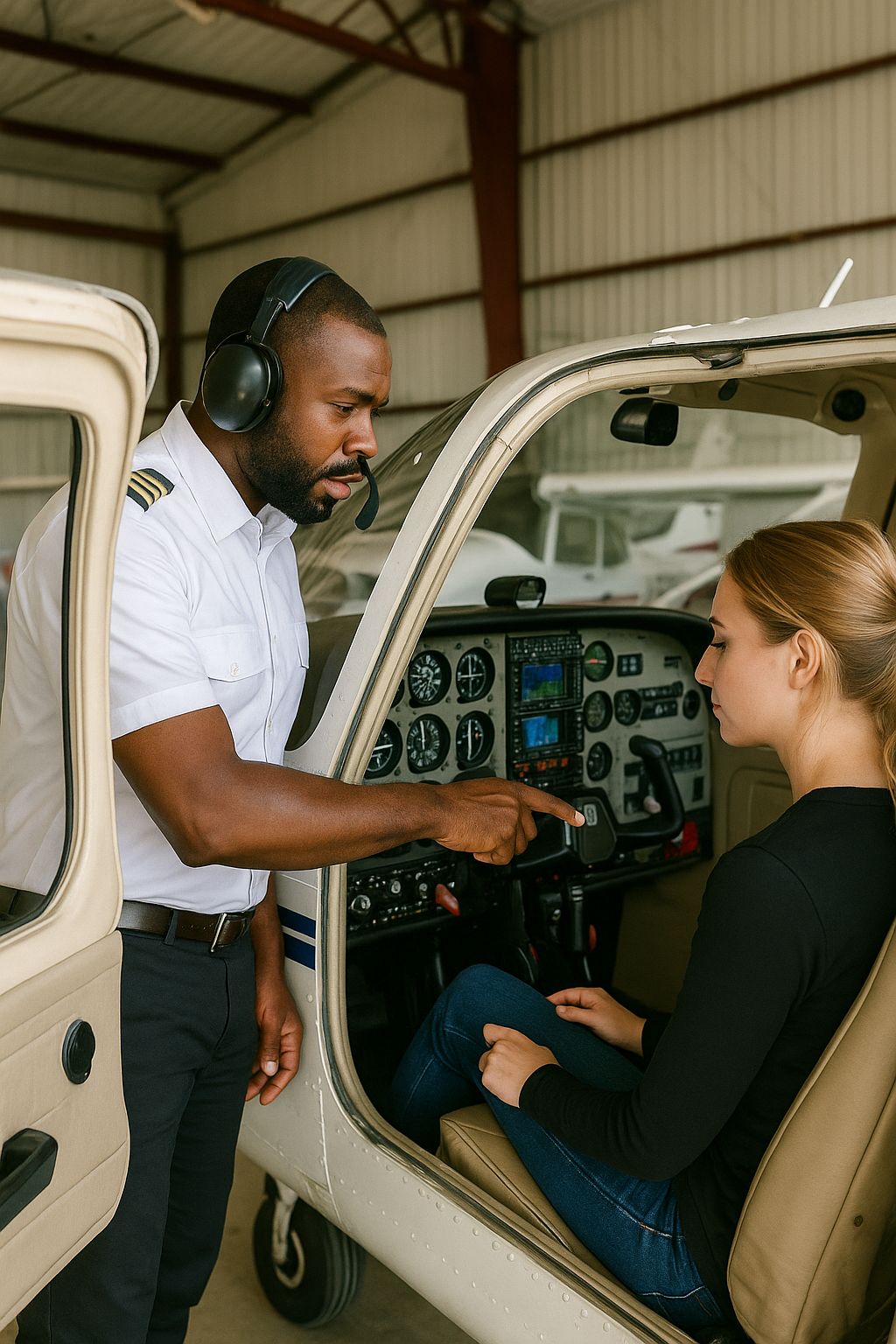
The Aviation Industry Demands Fast, Safe Turnarounds From a Major Airline
In commercial aviation, minutes matter. A turn is the short window between an aircraft’s arrival and its next departure. Every step in that window needs to be safe and fast. The airline in this case is a large, well-known carrier with a busy network and tight schedules. Any delay at one gate can ripple through the day and across the country.
Turnarounds bring many people together at once. Ramp agents guide equipment, unload and load bags, and place chocks. Fueling teams top off the tanks. Cabin cleaners, caterers, and maintenance specialists move through the cabin. Gate agents work with crews and customers. Load control checks weight and balance. Each job affects the next, and timing is everything.
The stakes are high. The company must keep customers moving, protect revenue, and use aircraft time wisely. Safety is nonnegotiable, and compliance rules shape every task. Crews also work in a real airport environment with noise, weather, and shifting priorities. That is a lot to manage in a narrow window.
- On-time performance protects connections and customer trust
- Efficient turns lower operating costs and keep aircraft productive
- Safe, consistent execution prevents injuries and damage
- Clear roles reduce stress and confusion for frontline teams
Real life adds pressure. A late inbound flight shrinks the schedule. A bag jam or catering swap throws off the sequence. A last-minute weight and balance update can change the plan. Different airports also develop different habits, which can lead to uneven results.
To meet these demands, the airline needed a simple way for busy teams to build a shared rhythm. People could not step away for long classes. They needed short, focused practice that fits into the workday and reflects what really happens on the ramp and at the gate. This case study explores how the company met that need and turned practice into faster, safer turns.
Variable Station Practices and Compressed Schedules Create a Persistent Turn Delay Problem
Across the network, each station had its own way of doing things. Local habits grew over time, especially with different vendors and mixed experience levels on each shift. On paper, the steps looked the same. In practice, the sequence and timing often changed from gate to gate. With tight schedules, that variation showed up as turn delays that never seemed to go away.
Compressed turns left little room for recovery. One task ran long and the rest had to wait. People made safe choices, but the clock kept moving. A few minutes lost to a mistimed handoff or a missing signal at the jet bridge could ripple into missed slots, frustrated customers, and extra costs.
Leaders saw the same delay themes repeat. The issues were not about effort. They were about coordination, timing, and shared cues under pressure. Crews had to make quick calls while managing safety checks, radio chatter, weather, and equipment traffic. New hires learned on the job next to veterans who did things a bit differently, which made consistency even harder.
- Task order drift, such as loading bags before the best fueling window or closing doors before paperwork was ready
- Slow or unclear handoffs at key moments like chocks in, ready to fuel, or ready to push
- Late or changing inputs from load control or maintenance that forced rework
- Equipment bottlenecks and bag jams that threw off the plan
- Weather, ramp congestion, and gate changes that increased back-and-forth
- Blended teams of airline staff and contractors who followed different habits
- Training heavy on slides and light on practice, which left gaps in real-time decision skills
Reports made the pattern clear. There was no single root cause. Small misses stacked up and turned into late departures. Station managers asked for a way to align crews on the same playbook without pulling people off the floor for long classes.
The challenge was to help everyone see the same ideal sequence, read the same cues, and make faster, safer choices in the moment. The team needed a simple, hands-on way to turn written SOPs into a shared rhythm and let people practice those choices before they hit the ramp.
Leaders Define a Performance-First Learning Strategy to Align Crews and Cut Waste
Leaders started with a clear promise to the operation. Training would show up as faster, safer turns that crews could see and feel at the gate. They set a simple goal. Get every station on the same playbook without pulling people off the floor for long classes. Learning time would be short. Practice would look like the real job. Results would be measured in minutes saved and errors avoided, not hours of content completed.
They sat with frontline teams and walked the turn step by step. Who does what, when, and based on which cue. Where do handoffs slow down. What does a great turn look like on a busy day. From those talks, they mapped the few moves that matter most and the timing that ties them together.
The team chose a small set of outcomes to track across all stations. On-time push. No injuries or damage. Fewer reworks at the jet bridge and in the belly. They also picked leading signals to watch during each turn, like the speed and clarity of key callouts, the order of bag and fuel tasks, and when doors close.
- Start with the work, not the slides, and build training around real tasks and cues
- Keep learning short so people can use it between flights or before a shift
- Let crews practice real choices under time pressure in a safe space
- Give all roles the same language for callouts, radio phrases, and visual cues
- Reinforce over weeks with quick refreshers, brief huddles, and peer coaching
- Design for the whole turn team so everyone sees how their step affects the next
- Use data from turns to tune the content and celebrate wins
To keep momentum, they formed a cross‑functional working group with station leaders, safety, and frontline voices. This group reviewed the playbook, checked it against SOPs, and flagged any gaps. They built quick prototypes, tested them at a few gates, and fixed issues before rolling out more widely.
The plan pointed to a practical blend. Short microlearning would teach the sequence and cues. Interactive decisions would let people try different paths and see the impact without risk. On-the-job aids would backstop memory at the moment of need. With the strategy in place, the team was ready to build the solution that crews could use every day.
Microlearning Modules With AI-Powered Exploration & Decision Trees Bring Turn Choreography to Life
The team built short microlearning modules that focus on one step in the turn and the cue that triggers it. Each lesson runs about five to seven minutes and fits between flights or in a pre‑shift huddle. Crews see the ideal sequence, learn the key callouts, and then jump into an interactive scenario that feels like a real gate on a busy day.
The heart of the practice is an AI tool that runs “what would you do next?” decision paths. It turns written SOPs into branching choices. As learners pick the next action, the AI reacts like the real operation. It updates time on the clock, shows safety risks, and changes what other teams can do. People can try again and compare paths to see which flow keeps the turn safe and on time.
- Modules cover tight moments such as chocks in, ready to fuel, bag load order, door close, pushback, and final paperwork
- Each module includes quick visuals, plain‑language cues, and a shared script for radio calls
- Interactive decisions let learners pick a next move and see the time and safety impact right away
- Short debriefs explain why a choice worked or caused a delay, with tips to fix it on the next try
The AI introduces the mess of real life. It may throw a late fuel truck into the mix, trigger a bag jam, or drop a last‑minute weight and balance change. It can add weather, a gate swap, or a tug in use at the next stand. Ramp, gate, fueling, and load control teams all practice the same scenario from their own view, so they learn how their timing helps or blocks the next role.
- Late fuel truck shifts the best window for loading bags and prompts a choice on staging
- Bag jam forces a decision about belly order and crew redeployments
- Last‑minute weight and balance update changes closeout timing and door status
- Radio congestion tests clear callouts and handoffs at critical moments
Here is a simple example. The inbound is six minutes late. Catering is ready, the belt loader is arriving, and the fuel truck is not yet on stand. The module asks, “What do you do next?” Choose to load aft bags first and the AI shows improved balance for fueling but a risk of blocking the cabin team. Choose to hold bags and you keep the aisle clear but lose two minutes. Learners can replay, tweak the order, and watch the result until they find the best flow.
Access is easy. Crews launch modules from a phone, a break room tablet, or a QR code at the gate. Stations use them for quick warm‑ups before the first bank, spot practice after an incident, and refreshers during weather holds. Because the sessions are short, teams can learn without leaving the operation uncovered.
- Content maps one‑to‑one to SOPs, aircraft types, and local equipment
- Shared language keeps callouts and visual cues consistent across roles
- Replays and side‑by‑side path comparisons build a common mental model
- Lightweight checklists and job cards reinforce the same steps on the ramp
- Scenario performance data helps leaders spot patterns and tune the next release
By blending quick teaching with decision‑driven practice, crews learned the rhythm of a great turn and how to keep it when the plan changes. The result was stronger coordination in the moment and fewer small slips that add up to a late push.
Cross-Functional Ramp, Gate, Fueling, and Load Control Teams Rehearse SOP Choices Under Realistic Disruptions
Practice worked best when whole turn teams trained together. Small groups from ramp, gate, fueling, and load control met for a short huddle, launched a module, and ran the same scenario from their own seats. Everyone followed the standard steps, or SOPs, and made live choices as the clock ticked. They saw how one move opened space for the next role or blocked it, which made the “why” behind the playbook click.
A typical session looked like this:
- Two-minute huddle to pick roles and set a target, such as a clean handoff at door close
- Three to five minutes in the scenario with “what would you do next” prompts
- The AI throws a curveball and the team adjusts in real time
- One-minute debrief to compare paths and choose a better sequence
- Quick replay to lock in the improved flow and shared callouts
The AI added the mess of a real airport, so practice felt honest and useful. It did not present trick questions. It surfaced common stress points and let people try a better move without risk.
- Late fuel truck pushes a choice on bag load order and staging to keep the fueling zone clear
- Bag jam forces a switch in belly sequence and a clear call to load control on changes
- Last-minute weight and balance update triggers a short pause on door close and a reset of paperwork
- Radio congestion tests short, standard phrases so handoffs stay crisp
Each role saw the same scene with a different view. Ramp agents watched equipment positions and chocks. Gate agents managed boarding pace and door timing. Fuelers tracked clear zones and pump time. Load control monitored numbers and closeout rules. Teams often swapped seats on the replay so each person could feel the other role’s pressure and learn what to listen for.
Shared language pulled it all together. The modules taught short, plain callouts that matched SOP checkpoints like “chocks in,” “ready to fuel,” “bags complete,” and “doors closed.” Rehearsing these cues in context reduced guesswork. People knew when to speak up and what to expect next.
Stations fit practice into the flow of the day. Crews used a module as a warmup before the first bank, a reset after an incident, or a filler during a weather hold. Because sessions were short, no one had to leave the line for long. New hires paired with veterans, contractors joined the same drills, and everyone aligned on one rhythm.
The result on the floor was visible behavior change. Handoffs tightened. Out‑of‑sequence moves dropped. Teams anticipated disruptions and adjusted early. Most important, crews built a shared mental model of a great turn and could keep it even when the day got noisy.
Data Show Shorter Turn Times, Fewer Handoff Errors, and Stronger Safety Margins
Leaders set a baseline and then watched a simple set of numbers as the rollout grew. They tracked average turn time, the share of flights that left on schedule, handoff errors at key checkpoints, and safety events on the ramp. They linked learning data from the scenarios with operations logs so they could see if better choices in practice showed up at the gate.
- Turn time dropped: pilot stations saw average turns shorten by about three minutes, with the same pattern when scaled
- More on-time pushes: the share of flights leaving on schedule rose by several points across morning and afternoon banks
- Fewer handoff misses: mistakes at “chocks in,” “ready to fuel,” “bags complete,” and “doors closed” fell by about one third
- Less rework: door reopen events, last-minute paperwork resets, and tug reposition calls all declined
- Stronger safety margin: minor equipment strikes and near-miss reports trended down while completion of critical checks held steady or improved
Scenario data helped explain the change. In the first attempts, many crews chose an out-of-sequence move when the AI introduced a late fuel truck or a bag jam. After one or two replays, most teams picked the better path and kept the flow. Within weeks, stations showed fewer out-of-sequence moves on the line as well. The same short, clear callouts used in practice began to show up over the radio during live turns.
Adoption also held up. Most frontline staff used at least one short module a week, often during a pre-shift huddle or while waiting for an inbound. Stations that kept up with quick refreshers saw steadier gains and fewer backslides after irregular operations days.
The business results were practical. Minutes saved across many turns freed gates, eased connection risk, and reduced crew overtime. Fewer handoff errors meant less stress and less stop-start work. Most important, the gains did not come at the cost of safety. Crews moved faster because they moved together, not because they cut corners.
Leaders kept the focus on what mattered. They shared a simple dashboard at standups, praised teams for clean handoffs, and used scenario trends to pick the next set of practice topics. The loop from practice to performance stayed tight, which helped the improvements stick.
Change Management, Coaching, and On-the-Job Aids Embed the New Behaviors in Daily Operations
The rollout treated training as a change effort, not just a course. Leaders explained the why, painted a picture of what good looks like, and made space in the schedule for short practice. They asked for visible use on the floor and promised to remove roadblocks like device access, logins, and shift coverage.
Each station named champions from ramp, gate, fueling, and load control. These champions learned the modules first, ran five to ten minute huddles, and coached peers. The first month focused on a few high-impact moments so teams could see quick wins and build trust in the new approach.
Managers received a simple toolkit they could use right away:
- A two-minute huddle script with one cue to reinforce, such as “ready to fuel”
- A scenario of the week inside the microlearning modules for fast group practice
- A one-page observation card with the exact callouts and timing to watch
- A small scoreboard with turn time, clean handoffs, and safety checks completed
- A 60-second debrief guide for after push to capture one keep and one improve
Coaching happened on the job. Supervisors and champions shadowed a live turn, watched for one or two moments, and gave tight feedback. The routine was simple and respectful, which kept it safe for people to try new moves.
- Before the bank: pick one checkpoint to watch and agree on the callout words
- During the turn: observe, note the timing, and help clear blockers if they appear
- After push: run a short debrief, replay the module if needed, and lock in the better flow
On-the-job aids backed up memory when the day got busy. The team kept them short and easy to find so no one had to dig through a manual.
- Pocket cards with the standard callouts for chocks, fueling, bags, doors, and pushback
- QR codes at gates and crew rooms that open the right module or a quick checklist
- Small posters by radios with the shared phrasing for key handoffs
- If-then strips on belt loaders and tugs that show the next best move when plans change
Communication was steady and light. Weekly notes shared one tactic that worked, one number that moved, and one story from a station. Leaders praised clean handoffs in standups, not just fast times. Early skeptics came around when they saw fewer last-minute scrambles and less back-and-forth on the radio.
Partners mattered. Contractors and vendor teams joined the same huddles and drills so everyone used the same cues. New hires got a short path through the most common scenarios in week one and paired with a coach for their first few turns.
Feedback loops kept the content fresh. Champions flagged confusing steps, and designers updated modules and job aids the same week. When data showed a new snag, such as door close timing on a specific aircraft type, the next scenario focused there.
To make the gains stick, leaders built habits. Stations ran a quick scenario at the start of the first bank, posted the same three metrics in the break room, and used the observation card during audits. The rhythm was simple: practice, perform, debrief, adjust. Over time, those small habits turned the new behaviors into the normal way of working.
Lessons From Aviation Guide L&D Leaders Adopting Microlearning and Decision-Driven Practice
This case shows how small, focused practice can shift a complex team job. Microlearning paired with AI-powered decision trees helped crews build a shared rhythm and make faster, safer choices when plans changed. The same ideas work outside aviation. Any fast, team-based process can benefit when people rehearse the right moves together and see the impact of each choice in the moment.
- Start with the work. Map the job step by step with frontline staff. Find the few moments that cause most delays or risk, and design training around those moments.
- Teach the sequence, not facts. Tie each short lesson to a clear cue, a next action, and a visible output. Keep the language plain and shared across roles.
- Make choices the unit of practice. Use AI-powered exploration and decision trees to ask “what would you do next,” show time and safety effects, and allow quick replays to compare paths.
- Train the team together. Let ramp, gate, fueling, and load control run the same scenario from their own seat. Rotate roles so people feel each other’s pressure and learn what to listen for.
- Keep it short and frequent. Five to seven minute sessions fit into huddles and holds. Spaced practice builds skill without pulling people off the floor.
- Respect safety gates. Lock nonnegotiable checks into the scenarios so speed never trades against safety or compliance.
- Remove friction. Make access simple with phones and QR codes. Cut extra logins. Put quick guides where the work happens.
- Close the loop with data. Track a few leading signals and outcomes, such as clean handoffs and turn time. Compare scenario choices with live results and tune content fast.
- Coach in the flow. Give supervisors a two-minute script, a one-page observation card, and job aids with exact callouts. Praise clean handoffs, not just fast clocks.
- Start small and scale. Pilot on one workflow and a few sites, fix pain points, then expand. Keep the playbook current as equipment and rules change.
These lessons travel well. Hospitals can rehearse bed turns and code team roles. Hotels can practice room turns under rush conditions. Warehouses can drill pick, pack, and load choices during volume spikes. Call centers can practice call routing and escalation paths. In each case, short teaching plus decision-driven practice builds speed through clarity, not shortcuts.
- Pick one process that causes delays and list three clear goals
- Co-map the steps, cues, and handoffs with frontline staff
- Create four to six micro lessons of five to seven minutes each
- Build decision-tree scenarios with three common disruptions and fast replays
- Run a daily huddle with one scenario and a one-minute debrief
- Track turn time or its match, clean handoffs, and safety checks, and adjust weekly
The big idea is simple. When people practice the right choices together, with honest disruptions and tight feedback, they carry that rhythm to the floor. That is how microlearning and decision-driven practice turn into real gains that last.
Is Microlearning With Decision-Driven Practice the Right Fit for Your Operation
In a large airline with tight turn windows and high safety stakes, the core problems were uneven station practices, split-second handoffs, and constant real-world disruptions. Short microlearning modules taught the ideal sequence and common callouts. AI-Powered Exploration & Decision Trees turned those SOPs into interactive “what would you do next?” moments. Crews practiced choices under time pressure, saw immediate effects on minutes and safety, and replayed to compare paths. Because sessions took 5-7 minutes and launched from phones or QR codes, teams used them in huddles and during holds. The result was faster, cleaner turns without trading away safety.
These same design moves can help any fast, team-based process. The key is to focus on the moments that matter, let people rehearse realistic choices together, and keep a tight loop between practice, coaching, and simple metrics. Use the questions below to decide if this approach fits your operation.
- What business outcome will we move, and is it sensitive to better timing and sequencing?
Why it matters: Clear targets like turn time, on-time start, or rework rate keep everyone focused and make ROI visible.
What it uncovers: If the outcome is driven mostly by outside forces (supply shortages, ATC constraints, IT outages), decision practice alone will not move the needle. If small timing gains matter, the approach can pay off. - Do we have a repeatable process with clear SOPs and common disruptions we can safely simulate?
Why it matters: Decision trees work best when there is an ideal flow and known “better or worse” choices under realistic stress.
What it uncovers: If SOPs are vague or vary by site, standardize first. If the work is safety critical, bake nonnegotiable checks into scenarios so speed never overrides safety. - Is our main gap about coordination and handoffs, not missing tools, staffing, or policy authority?
Why it matters: The method improves how people sequence tasks and talk to each other in the moment.
What it uncovers: If the bottleneck is equipment, headcount, or approvals, fix those constraints first. If mis-timed steps and unclear cues are common, microlearning plus decision practice fits. - Can frontline teams practice for 5-7 minutes in the flow of work with easy device access?
Why it matters: Adoption depends on low friction. Short sessions only work if people can launch them quickly.
What it uncovers: If devices are scarce or logins are painful, solve access early with shared tablets, QR codes, or single sign-on. Without this, usage will fade. - Are we ready to support change with champions, light coaching, and a small measurement loop for 8-12 weeks?
Why it matters: Lasting gains come from practice, feedback, and a few visible metrics repeated often.
What it uncovers: If you cannot name champions, run quick huddles, or share a simple dashboard, expect a short-lived bump. If you can, behaviors will stick and scale.
If you can answer yes to most of these, a blend of microlearning and decision-driven practice is a strong match. If not, use the gaps as a punch list. Standardize the playbook, remove access friction, address hard constraints, and line up coaching. Then pilot on one process, measure early, and expand with confidence.
Estimating the Cost and Effort for Microlearning With Decision-Driven Practice
Here is a practical way to estimate the cost and effort to build a microlearning program that uses AI-powered decision trees to rehearse turnaround choreography. The figures below reflect a mid-size first wave: about 30 short modules covering high-impact turn moments, roughly 800 frontline learners across 10 stations, and one year of licensing and support. Adjust volumes up or down to match your scope.
- Assumptions Used in This Estimate: 30 microlearning modules with embedded decision-tree practice; 800 learners (ramp, gate, fueling, load control); 10 stations in the first wave; 12 months for licensing and support; blended team using a $150/hour external rate where noted; internal SME time not priced.
Key Cost Components and What They Cover
- Discovery and Planning: Align goals, define metrics, map SOPs and handoffs with frontline teams, and confirm safety gates. This sets scope and prevents rework later.
- Learning and Experience Design: Create the training blueprint, shared callouts, decision points, and visual style. Produce outlines and scenario maps that anchor all modules.
- Content Production: Microlearning Modules: Build short, focused lessons (5–7 minutes) that teach the sequence and cues with simple visuals and job-relevant examples.
- Scenario Authoring and AI Decision Trees: Convert SOPs into branching “what would you do next?” paths, model time and safety impacts, and tune realism with common disruptions.
- Light Media and Voiceover: Record brief voice lines, capture reference photos, and create simple illustrations to speed comprehension.
- Technology and Integration: License the AI decision-tree platform and a learning record store (LRS). Integrate with your LMS and single sign-on so access is fast and secure.
- Devices and Access: Provide shared tablets where needed and place QR codes at gates and crew rooms for quick launch during huddles and holds.
- Data and Analytics: Instrument xAPI statements, set up dashboards that tie practice to live turn metrics, and define a small KPI set for station rollups.
- Quality Assurance and Compliance: Test modules across devices and browsers, and complete safety and regulatory reviews so nonnegotiable checks are locked in.
- Piloting and Iteration: Support a 5-station pilot with light on-site visits, collect feedback, and run quick sprints to refine scenarios, callouts, and job aids.
- Deployment and Enablement: Train station champions, deliver a manager toolkit, and produce pocket cards, checklists, and at-gate QR signage.
- Change Management and Communications: Build simple comms and standup materials that explain the why, the target behaviors, and how to use the tools.
- Support and Maintenance (Year 1): Provide helpdesk and admin coverage, and schedule light content updates as aircraft, equipment, or SOPs evolve.
- Contingency: Reserve ~10 percent to handle surprises such as added modules, integration tweaks, or expanded pilot needs.
| Cost Component | Unit Cost/Rate (USD) | Volume/Amount | Calculated Cost |
|---|---|---|---|
| Discovery and Planning | $150/hour | 120 hours | $18,000 |
| Learning and Experience Design | $150/hour | 160 hours | $24,000 |
| Content Production: Microlearning Modules | $2,000/module | 30 modules | $60,000 |
| Scenario Authoring and AI Decision Trees | $3,000/module | 30 modules | $90,000 |
| Light Media and Voiceover | $500/module | 20 modules | $10,000 |
| AI Decision-Tree Tool License (12 Months) | $5/user/month | 800 users × 12 months | $48,000 |
| Learning Record Store (LRS) License (12 Months) | $500/month | 12 months | $6,000 |
| LMS and SSO Integration (One-Time) | — | Flat | $12,000 |
| Shared Tablets for Gates and Huddles | $300/device | 20 devices | $6,000 |
| QR Signage and Stands | $25/unit | 60 units | $1,500 |
| Data and Analytics Instrumentation and Dashboards | $150/hour | 80 hours | $12,000 |
| Quality Assurance (Cross-Device) | $400/module | 30 modules | $12,000 |
| Safety and Regulatory Review | — | Flat | $10,000 |
| Pilot On-Site Support (5 Stations) | $2,000/station | 5 stations | $10,000 |
| Iteration Sprints After Pilot | $150/hour | 80 hours | $12,000 |
| Champion Training Workshops | $1,200/session | 8 sessions | $9,600 |
| Job Aids and Pocket Cards | — | Flat | $4,000 |
| Change Management Comms Pack | — | Flat | $5,000 |
| Manager Toolkit (Huddles, Observation Cards) | — | Flat | $3,000 |
| Support and Maintenance: Content Updates (Year 1) | — | Flat | $20,000 |
| Support and Maintenance: Helpdesk/Admin (Year 1) | — | 0.25 FTE | $20,000 |
| Contingency (10%) | — | 10% of subtotal | $39,310 |
| Total Estimated Cost (Year 1) | — | — | $432,410 |
How to Right-Size the Budget
- Start with fewer modules by focusing on the five to eight moments that drive most delays, then add content in monthly sprints.
- Reduce on-site time by using virtual pilot support and local champions to collect feedback.
- Phase licenses by enrolling stations in waves so fees scale with adoption.
- Reuse assets across aircraft families where steps and cues match, and keep media lightweight.
Effort and Timeline Signals
- Weeks 1–4: Discovery and design blueprint; confirm metrics and safety gates.
- Weeks 5–10: Build first 10–12 modules and scenarios; complete integrations; QA and safety review.
- Weeks 11–14: Pilot at 5 stations; iterate content and job aids.
- Weeks 15–24: Roll out remaining modules; train champions; enable dashboards; expand to 10 stations.
- Ongoing: Weekly refreshers, light updates, and monthly dashboard reviews to keep improvements on track.
These numbers are directional, but they show the main levers. The largest costs are content and scenarios, followed by platform licenses and integrations. Tight scoping, shared callouts, and fast feedback loops keep both cost and effort under control while delivering real gains on the ramp.