Executive Summary: This executive case study profiles a staffing and recruiting organization focused on Campus & Early Career Programs that implemented a Tests and Assessments–led learning strategy, paired with the Cluelabs xAPI Learning Record Store to centralize performance and hiring data. By connecting assessment results, microlearning activity, ATS funnel events, and candidate NPS in one view, the team correlated training proficiency to higher screen-to-interview and interview-to-offer conversion and improved candidate experience. Leaders gained clear ROI reporting while managers used dashboards for targeted coaching and faster, more consistent ramp.
Focus Industry: Staffing And Recruiting
Business Type: Campus & Early Career Programs
Solution Implemented: Tests and Assessments
Outcome: Correlate training to conversion and candidate NPS.
Cost and Effort: A detailed breakdown of costs and efforts is provided in the corresponding section below.
Service Provider: eLearning Solutions Company
The Organization Operates in Staffing and Recruiting With Campus and Early Career Programs
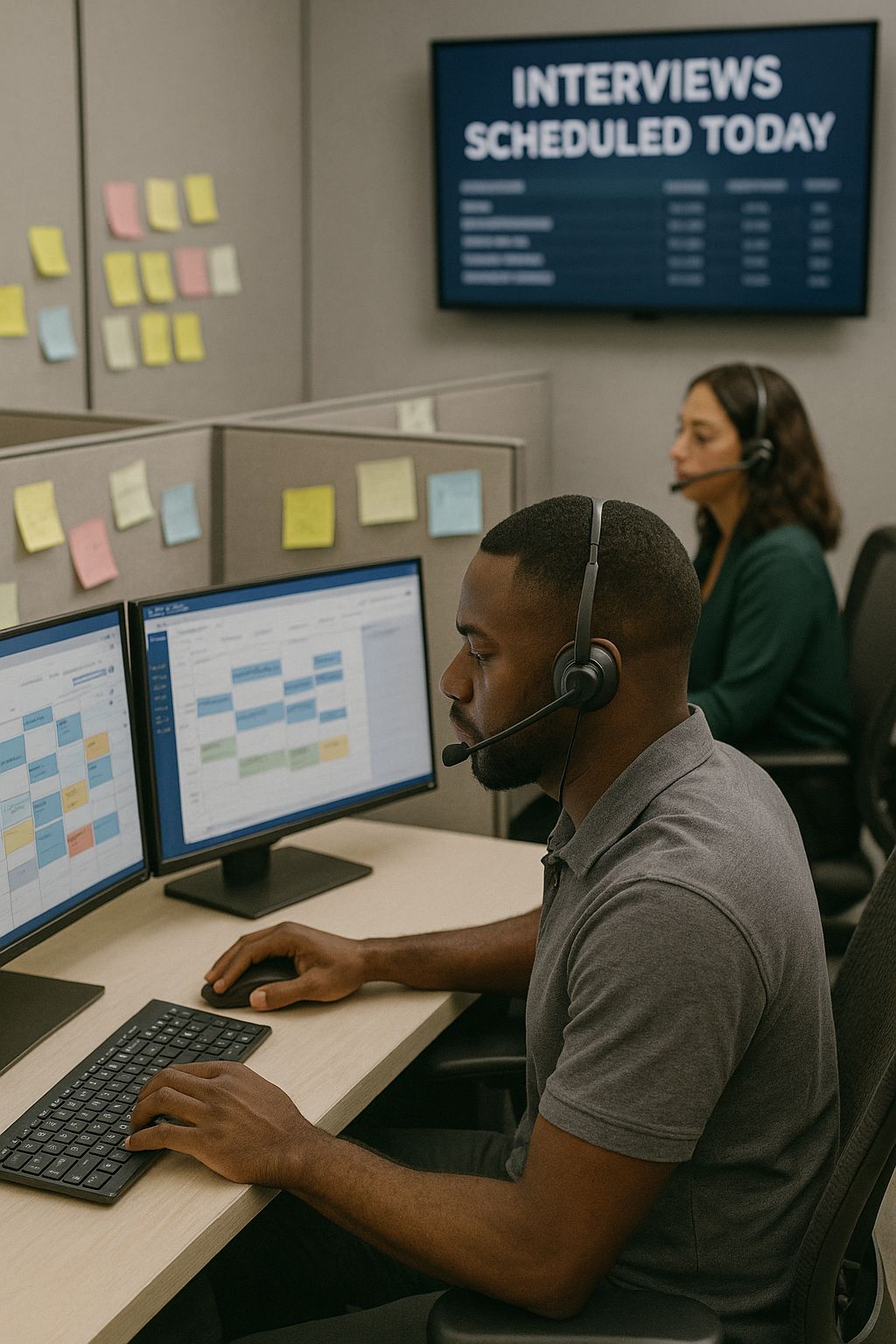
This case study follows a staffing and recruiting provider that designs and runs campus and early career hiring programs. The team works with university talent and recent grads across many roles and locations. Their calendar is packed with career fairs, virtual events, sourcing sprints, screenings, and interviews. The work is fast, high volume, and very visible to both candidates and client stakeholders.
Success here depends on consistent recruiter skills and a smooth process. Coordinators and recruiters must source quickly, run structured screens, give clear feedback, and manage offers with care. Many team members are new each season, so ramp time and quality are front and center. At the same time, candidates expect a fair, transparent, and human experience.
The operating environment adds pressure. Hiring surges happen in short windows. University partners and client teams all have different expectations. Data lives in several systems. Leaders need to spot what helps or hurts conversions, and they want proof that training makes a difference, not just activity reports.
- Move fast without losing quality in screening and interviews
- Raise conversion at each stage of the funnel
- Improve candidate Net Promoter Score and protect brand on campus
- Ramp seasonal recruiters quickly and consistently
- Control cost per hire while meeting client goals
- Show clear ROI for learning and development
This is the backdrop for the case study. The organization set out to build a practical way to upskill teams, keep the candidate experience strong, and link training to real hiring results.
High-Volume Requisitions and Candidate Expectations Create the Central Challenge
Campus and early career recruiting runs on tight timelines. Dozens of openings go live at once. Thousands of students and recent grads apply in a few weeks. Events, screens, and interviews stack up day after day. The pace is fast, the volume is high, and the experience is public, since candidates talk to each other and share what happens.
Candidates expect quick replies, clear next steps, and fair treatment. If communication lags or interviews feel inconsistent, they drop out. A slow or confusing process hurts conversions and word of mouth. It also makes it harder to fill roles on time for clients.
Inside the team, the work is just as demanding. Many recruiters and coordinators are seasonal or new to campus programs. Training windows are short. People learn on the fly. Without time to practice key calls and screens, quality varies by person and by location. A few strong recruiters carry results, while others struggle to ramp.
The data picture adds more strain. Learning activity lives in one system. The hiring funnel lives in the ATS. Candidate surveys live somewhere else. Reports are manual and late. Leaders cannot see which training helps, which skills need coaching, or how recruiter proficiency ties to conversion and candidate NPS.
- High application volume in short bursts creates bottlenecks in screening and scheduling
- Inconsistent interview quality and feedback confuse candidates and reduce trust
- New recruiters need faster ramp and a clear way to practice core conversations
- Training is hard to measure, so wins and gaps stay hidden
- Data sits in silos, so the team cannot link learning to funnel movement or NPS
- Clients expect on-time fills and a strong brand presence on campus
This is the central challenge: keep speed and quality high at scale, give every recruiter a reliable way to build skills, and prove that training moves the metrics that matter.
The Team Defines a Data-Driven Learning and Development Strategy to Link Training to Funnel Outcomes
The team knew they needed a plan that tied learning to real hiring results. They started by asking three simple questions. Which skills move the funnel at each stage. How will recruiters practice and prove those skills. How will we know training works in the wild.
They mapped the hiring journey from first outreach to offer accept. For each step, they listed the make-or-break skills. Examples include clear phone screening, structured interview questions, fair evaluation, transparent updates, and confident offer calls. They wrote short checklists and simple rubrics so every recruiter knew what “good” looked like and could score their own work the same way a lead would.
Next, they chose learning formats that fit the pace of campus hiring. Short microlearning to teach a skill. Quick practice to try it. Tests and assessments to confirm understanding. They set target scores that signaled “ready to run screens” or “ready to interview.” If someone fell short, they received a short refresher and another try. This kept quality high without slowing the team.
The plan also focused on proof. The group defined a small set of outcome metrics that mattered to clients and candidates. Time to first response. Screen-to-interview conversion. Interview-to-offer conversion. Offer acceptance. Candidate NPS. They decided to capture learning activity and scores in one place and connect them to ATS stages and survey results. Shared tags like recruiter ID and campus cohort would make the data line up.
Leaders agreed to review the numbers on a steady cadence and act fast. Wins would become playbooks. Gaps would trigger targeted coaching or a tweak to training. Pilots would come first, then broader rollout once the data showed lift.
- Map each funnel stage to the skills that matter most
- Define simple rubrics and checklists for consistent quality
- Use microlearning, practice, and assessments to build and verify skills
- Set clear targets that signal readiness for key tasks
- Centralize learning, ATS, and NPS data with shared identifiers
- Review dashboards on a regular rhythm and coach to the signals
- Pilot, measure, and scale what works quickly
Tests and Assessments With the Cluelabs xAPI Learning Record Store Form the Core Solution
The program put tests and assessments at the center and used the Cluelabs xAPI Learning Record Store (LRS) to link every learning touchpoint to real hiring results. The idea was simple. Help recruiters build the right skills fast, check those skills with fair and repeatable measures, and track how skill gains show up in the funnel and in candidate feedback.
The team built short, focused checks for each step in the process. A diagnostic set the starting point for new hires. Knowledge checks covered policy and process basics. Scenario questions tested judgment, such as how to run a structured screen or give clear next steps. A calibrated rubric scored practice interviews. Passing scores unlocked live work, which kept quality high without slowing the team.
Each assessment came with microlearning and quick practice. If a recruiter missed a topic, they received a short refresher and tried again. Feedback was specific and actionable, like which probe questions to add or how to flag potential bias. This kept coaching tight and practical.
All activity flowed into the Cluelabs xAPI LRS. Tests, microlearning, and practice sent xAPI statements to the LRS. ATS events such as screened, interviewed, offer, and accepted came in through webhooks. Candidate NPS responses landed the same way. Records were tagged with shared identifiers like recruiter ID, requisition ID, and campus cohort so the data lined up.
With the data in one place, the team built clear dashboards. Leaders could see how training completion and assessment proficiency related to screen-to-interview and interview-to-offer conversion, and to candidate NPS. Underperforming skills triggered targeted refreshers. Strong content became the new standard. Executives received a clean ROI view that tied learning to speed, quality, and experience.
- New recruiters take a diagnostic, then complete only the microlearning they need
- Practice calls are scored with a shared rubric to set a consistent bar
- Passing a short assessment unlocks live screening or interviewing
- All learning and hiring events stream to the LRS with shared tags
- Dashboards surface which skills lift conversion and raise NPS
- Managers coach to signals in weekly reviews and adjust goals as needed
The result is a clean loop. Teach, practice, assess, and track outcomes in one system. The team can move fast during peak season and still prove that better skills create better hiring results and a better candidate experience.
The Solution Connects Assessments, Microlearning, ATS Events, and Candidate NPS
To make training count, the team connected what people learned to what happened in the hiring funnel and how candidates felt about it. The Cluelabs xAPI Learning Record Store sat at the center. It gathered signals from assessments and microlearning, plus stage changes in the ATS and candidate NPS survey results, so leaders could see cause and effect rather than guess.
Here is how it worked in practice. When a recruiter finished a module or a practice activity, the score and skill tags went to the LRS. When the ATS showed a move from screen to interview or interview to offer, that update flowed into the same place. After key touchpoints, candidates shared an NPS rating and a short comment, which was added too. Every record used simple shared tags such as recruiter ID, requisition ID, school, and cohort dates so the pieces lined up.
With all data in one view, the team could spot clear patterns. Strong scores on the structured screen assessment matched higher screen-to-interview conversion. Better rubric scores on practice interviews matched fewer rescopes and faster offers. When NPS dipped after the first screen, comments often pointed to unclear next steps, which led to a quick tweak in the microlearning and fresher coaching tips.
Managers used weekly dashboards to guide action. If someone missed a target on a key skill, the system recommended a short refresher and a retake. If a cohort showed slower movement at one stage, the team reviewed sample calls, updated the checklists, and shared a playbook. High performers became peer coaches, and their approaches were folded into future assessments and examples.
A simple day in the life made this real. On Monday, a new recruiter completed the “Structured Screen” module and passed the short assessment. On Wednesday, the ATS logged five completed screens. On Friday, NPS comments showed confusion about timelines. The dashboard flagged the pattern, and the recruiter took a five-minute follow-up on setting expectations, then used a new closing script on the next calls. The next week’s NPS moved up and so did conversion.
- Assessments confirm readiness and pinpoint which skills need a quick boost
- Microlearning offers just-in-time refreshers tied to those skill gaps
- ATS events show real movement in the funnel and where handoffs slow down
- Candidate NPS and comments reveal how the experience feels on the other side
- The LRS connects all four so leaders can coach, tune content, and report ROI with confidence
Training Proficiency Correlates With Conversion and Improves Candidate NPS
Once the program went live, the pattern was easy to see. Recruiters who hit the target scores on key assessments moved more candidates from screen to interview and from interview to offer. Candidate NPS rose in the same pockets, which showed that better skills were not only faster but also kinder to the candidate experience.
The clearest signal came from the structured screen assessment. Recruiters who scored high asked stronger probe questions, set real next steps, and sent clean notes. Their candidates advanced more often and dropped out less. Leaders could see the split on the dashboard and shift coaching time to the skills that mattered most.
Practice interviews told a similar story. When recruiters used a consistent question flow and documented evidence, hiring managers made decisions faster. Interviews led to offers with fewer reschedules and fewer back-and-forths. That momentum showed up as healthier conversion through the middle of the funnel.
Candidate feedback confirmed the change. NPS comments moved from confusion about timelines to praise for clear updates and respectful screens. Short refreshers on expectation setting and follow-up templates made an immediate difference. When NPS dipped in one cohort, the team traced it to vague closing language, updated the module, and saw the next cohort bounce back.
The Cluelabs xAPI Learning Record Store made these links visible. Leaders could filter by recruiter, school, or requisition and watch how proficiency scores lined up with funnel results and NPS over time. Variability across the team narrowed as targeted refreshers and peer coaching focused on the exact gaps the data revealed.
- Higher assessment scores predicted stronger screen-to-interview and interview-to-offer conversion
- Clear next steps and evidence-based notes reduced drop off and rework
- Small content tweaks on setting expectations improved NPS comments within a cohort
- Targeted refreshers outperformed broad retraining and sped up ramp for new recruiters
- Dashboards built trust with executives by showing where training moved the needle
The takeaway is straightforward. When you verify the right skills and connect them to the funnel and to candidate sentiment, you get better conversions and a better experience. The team could prove it with data and act on it week by week.
Dashboards Enable Targeted Coaching, Content Tuning, and Executive ROI Reporting
With the Cluelabs xAPI Learning Record Store at the center, the team built simple dashboards that pull learning and hiring signals into one view. Managers can see who finished microlearning, who passed each assessment, what happened in the ATS, and how candidates rated the experience. Because all records share clear tags like recruiter ID and cohort, filters stay clean and comparisons are fair.
For coaching, the dashboards make the next step clear. If a recruiter falls short on the structured screen assessment and shows a lower screen-to-interview rate, the system flags it. The manager assigns a five-minute refresher, reviews two calls, and schedules a quick retake. When the score rises, conversion often follows. Focus stays on the few skills that matter most, not on long retraining.
For content tuning, the team can spot where people stumble. If many miss the same question or NPS comments point to unclear next steps, they shorten the module, add a checklist, and update the sample script. They watch the next week’s dashboard to see if the change helps. If it does, the update becomes the new standard across cohorts.
For executives, the dashboards tell a simple story. Here is what we taught, here is how people scored, and here is what moved in the funnel and in candidate NPS. Views show trends by school, cohort, and requisition. Leaders can see time to first response, movement at each stage, and the impact of training on those measures. The result is clear ROI reporting that supports faster decisions.
- Skill proficiency by recruiter and cohort with clear pass targets
- Conversion by stage linked to the skills that lift those stages
- Candidate NPS trends with top comment themes after key touchpoints
- Ramp curves that show how fast new team members reach readiness
- Alerts when a skill dips or a stage stalls so managers can act quickly
The cadence is steady and light. Teams review the dashboards in a short weekly huddle, act on one or two signals, and check back the next week. Over time, this rhythm raised consistency, cut noise in coaching, and gave leaders confidence that training time was paying off.
The Team Shares Lessons Learned for Scaling Campus Recruiting With Assessments and an LRS
After a full season, the team collected what worked and what to avoid. Their advice stays simple so others can use it right away.
- Map the funnel first and pick the few skills that move each stage
- Keep modules short and let people practice right away
- Use pass scores to unlock live work, and allow quick retakes to avoid bottlenecks
- Calibrate rubrics with two raters at first and build a small library of gold standard examples
- Decide data tags early such as recruiter ID, requisition, school, and cohort and use them everywhere
- Automate data feeds so the Cluelabs xAPI Learning Record Store stays fresh every day
- Ask NPS at the moments that matter with one question and a comment box, and close the loop with a follow up
- Protect privacy by masking personal details and limiting who can read open comments
- Coach in short weekly huddles and choose one or two actions, not ten
- Send short refreshers based on signals in the dashboard, not on a fixed calendar
- Pilot with two cohorts to set a baseline and prove lift before scaling
- Share wins fast with simple playbooks and sample scripts so others can copy what works
- Retire or revise content that does not move a metric after two cycles
- Invite hiring managers to help shape the rubrics and question flow
- Prep for peak season with pre-training and a test of the data feeds under heavy use
- Show ROI in plain terms such as time to first response, time to fill, and accepted offers
- Watch for equity gaps by school or region and update training and checklists to keep the process fair
- Focus reports on the few metrics that matter most such as screen to interview, interview to offer, and NPS
- Give recruiters quick job aids and templates they can use during calls
- Explain the why, ask for feedback, and adjust when something adds friction
The big lesson is clear. Pick the skills that matter, measure them well, and connect the dots in the LRS. Then coach to the signals each week. This steady loop scales during peak season and keeps both conversions and candidate experience moving up.
Is An Assessment-Driven, LRS-Backed Approach Right For Your Organization
In campus and early career recruiting, speed and consistency decide outcomes. The organization in this case faced short hiring windows, large applicant pools, and new recruiters who had to ramp fast. Candidates wanted quick replies and clear steps. Leaders needed proof that training improved conversion and candidate sentiment. The team met these needs with two moves. First, they used targeted tests and assessments to verify must-have skills and unlock live work only when people were ready. Second, they used the Cluelabs xAPI Learning Record Store (LRS) to pull learning data, ATS events, and candidate NPS into one place. That made it possible to see which skills lifted each stage of the funnel and where to coach next.
Assessments kept quality high without slowing the team. Short microlearning filled gaps, and quick retakes kept momentum. The LRS connected the dots. It streamed xAPI statements from modules and practice, ingested ATS stage changes and NPS via webhooks, and used shared tags like recruiter ID, requisition, and cohort to line everything up. With clean dashboards, managers targeted coaching at the few skills that moved conversion. Executives saw clear ROI through trends in stage-to-stage movement, time to first response, and NPS shifts.
If you are considering a similar path, use the questions below to guide an honest fit check.
- Do you run high-volume, repeatable hiring cycles where a few core skills drive results?
Why it matters: This approach shines when the work is frequent and consistent, like screens and structured interviews.
What it uncovers: If roles and processes vary wildly, you may need more bespoke coaching and fewer standardized assessments. If the work is repeatable, assessments will scale quality and speed. - Can you connect learning, ATS, and survey data with shared identifiers?
Why it matters: The LRS delivers value only when data lines up across systems.
What it uncovers: You may need API access, data tags such as recruiter ID and requisition, and light IT support. Without these, you can train well but you cannot prove impact with confidence. - Are you willing to gate live work based on skill checks and pass targets?
Why it matters: Gating keeps quality high and reduces rework that slows the funnel.
What it uncovers: This requires buy-in from managers and recruiters. If the culture resists gating, expect slower gains and less reliable outcomes. - Do managers have time for short weekly coaching guided by dashboards?
Why it matters: Data only helps if someone acts on it quickly.
What it uncovers: You may need to adjust meeting rhythms, train managers on quick call reviews, and set clear follow-ups. Without this cadence, insights fade and skills drift. - Which outcomes will define success, and can you measure them now?
Why it matters: Clear metrics focus design and prove ROI.
What it uncovers: Pick a small set such as time to first response, screen-to-interview, interview-to-offer, accepted offers, and NPS. If baselines or reliable measures are missing, plan a short pilot to establish them before scaling.
The goal is fit, not perfection. If most answers point to repeatable work, accessible data, and a coaching rhythm, an assessment-driven, LRS-backed solution can raise conversion and improve candidate experience while giving leaders the proof they need.
Estimating The Cost And Effort To Implement An Assessment-Driven, LRS-Backed Program
The estimates below reflect a mid-size campus recruiting program that uses tests and assessments tied to microlearning, with the Cluelabs xAPI Learning Record Store (LRS) at the center. They assume about eight short modules, six assessment sets, two dashboards, a two-cohort pilot, and a team of roughly 80 recruiters and 10 managers. Rates and volumes are placeholders that you can adjust to your market, scale, and internal capacity. A typical plan reaches a pilot in 8 to 10 weeks, then scales in another 4 to 6 weeks.
Discovery and planning. Align leaders on goals, map the funnel, define the skills that move each stage, and inventory data sources and APIs. Deliver a project plan, governance, and a clear tagging scheme. Effort is light to moderate and sets the foundation for clean data later.
Skills, rubrics, and assessment design. Translate the critical skills into simple checklists, scoring rubrics, and assessment blueprints. Calibrate what good looks like so scores are consistent across managers and cohorts.
Microlearning production. Build short modules that teach one skill at a time and include quick practice. Keep each piece under 10 minutes so ramp stays fast during peak season.
Assessment and item bank development. Create diagnostic checks, knowledge items, and scenario questions for each stage. Set pass targets that unlock live work once a skill is verified.
Practice and rubric assets. Produce sample calls, gold-standard examples, and scoring guides so coaches can give specific, fair feedback in minutes.
Technology and integration. Stand up the Cluelabs xAPI LRS, connect the LMS or content host, and instrument content with xAPI. Build ATS webhooks so stage changes flow into the LRS. Connect the NPS survey tool so ratings and comments appear next to learning signals. The LRS has a free tier, but most campus programs will plan for a paid tier once volume grows.
Data and analytics. Define xAPI statements and tags, model the funnel, and build dashboards that show proficiency, conversion by stage, and candidate NPS. Add filters for recruiter, school, requisition, and cohort so managers can act quickly.
Quality assurance and compliance. Test content on target devices, verify xAPI events, check accessibility, review privacy and security, and validate that rubrics produce stable scores across raters.
Pilot and iteration. Run two cohorts, observe where people struggle, tune items and modules, and confirm that proficiency predicts movement in the funnel.
Deployment and enablement. Train managers on the dashboards, coach reviewers on the rubrics, and give recruiters job aids and short refreshers. Keep sessions brief and repeatable.
Change management and communications. Explain why pass targets gate live work, how coaching will run, and what success looks like. Set a simple message cadence for recruiters, managers, and executives.
Ongoing support and optimization. Maintain the LRS and dashboards, refresh a few modules per quarter, operate the NPS program, and run short weekly or biweekly coaching check-ins.
| Cost Component | Unit Cost/Rate (USD) | Volume/Amount | Calculated Cost |
|---|---|---|---|
| Discovery and Planning | $120 per hour | 70 hours | $8,400 |
| Skills, Rubrics, and Assessment Design | $120 per hour | 100 hours | $12,000 |
| Microlearning Production | $2,000 per module | 8 modules | $16,000 |
| Assessment and Item Bank Development | $1,200 per assessment set | 6 sets | $7,200 |
| Practice and Rubric Assets | $1,000 per set | 6 sets | $6,000 |
| xAPI Instrumentation in Content | $95 per hour | 40 hours | $3,800 |
| Cluelabs xAPI LRS Subscription (Annual) | $200 per month | 12 months | $2,400 |
| ATS Integration and Webhooks | $140 per hour | 60 hours | $8,400 |
| LMS and SSO Integration | $130 per hour | 24 hours | $3,120 |
| NPS Survey Tool (Annual) | $200 per month | 12 months | $2,400 |
| Analytics and Dashboard Build | $120 per hour | 80 hours | $9,600 |
| BI Viewer Licenses (Annual) | $12 per user per month | 10 users × 12 months | $1,440 |
| Quality Assurance and Accessibility | $100 per hour | 60 hours | $6,000 |
| Data Privacy and Security Review | $150 per hour | 20 hours | $3,000 |
| Rater Calibration Sessions | $60 per hour | 8 leads × 3 hours | $1,440 |
| Pilot and Iteration | $110 per hour | 100 hours | $11,000 |
| Deployment and Enablement | $110 per hour | 60 hours | $6,600 |
| Change Management and Communications | $100 per hour | 40 hours | $4,000 |
| Ongoing Support and Optimization (Year 1) | Blended | 96 support hours, 4 content refreshes, NPS ops | $15,920 |
| Total Estimated Year 1 Cost | $128,720 |
Year 2 costs drop to the subscriptions and the ongoing support line, plus any new content you choose to add. If your ATS already supports webhooks and your BI platform is in place, integration time and license costs will be lower. If you do not need eight modules or six assessments, content costs scale down in a straight line. Use the table as a worksheet, adjust the volumes to your reality, and you will have a quick, defensible budget for planning and approval.