Executive Summary: This case study explores how a consumer goods company in the Baby & Wellness segment deployed Automated Grading and Evaluation to standardize readiness and raise quality gates for sensitive product lines. Using scenario-based assessments and the Cluelabs xAPI Learning Record Store to centralize performance data, the organization achieved consistent, real-time visibility across sites, gated certification in the LMS, and audit-ready records. Executives and L&D teams will find practical guidance on strategy, rollout, costs, and lessons learned for applying Automated Grading and Evaluation at scale.
Focus Industry: Consumer Goods
Business Type: Baby & Wellness
Solution Implemented: Automated Grading and Evaluation
Outcome: Elevate quality gates for sensitive categories.
Cost and Effort: A detailed breakdown of costs and efforts is provided in the corresponding section below.
Solution Provider: eLearning Company, Inc.
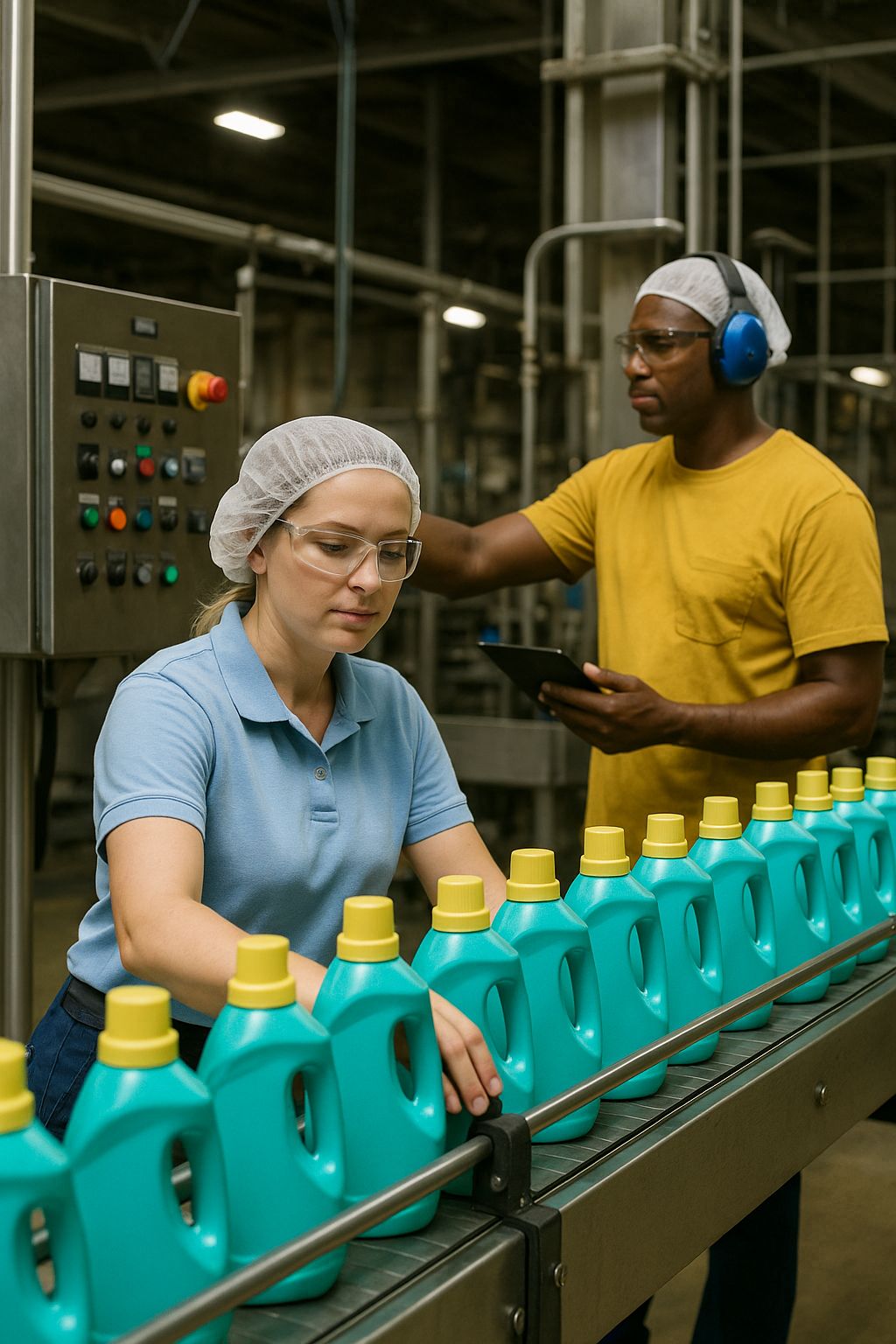
A Baby and Wellness Consumer Goods Business Faces High Stakes in Quality and Compliance
Parents and caregivers put extraordinary trust in Baby and Wellness products. A lotion, a wipe, a bottle, a vitamin. Each one must be safe, clean, and exactly as promised. That trust is fragile. One slip at a factory, a warehouse, or a store can put families at risk and damage a brand overnight.
Our case study looks at a consumer goods business that makes and distributes Baby and Wellness items across several plants and fulfillment centers. The company runs a mix of owned brands and private label lines, with products on major retail shelves and online. Teams span operations, quality, vendor management, R&D, regulatory, customer care, and field sales, all working against tight timelines and strict standards.
The stakes are high because the categories are sensitive. Ingredients and materials must meet tough rules. Processes need to be consistent on every shift. New formulas and seasonal packs roll out fast. Retailers audit often. Social reviews travel far and fast. A minor mistake can lead to rework, waste, recalls, or lost shelf space.
- Safety and compliance must be proven, not assumed
- Complex product lines increase the chance of errors
- Speed to market leaves little room for re-training
- Distributed teams and vendors create uneven practices
- Caregivers and retailers expect zero defects
Training is not the challenge. Consistency is. The workforce includes new hires, seasoned operators, temps during peak periods, and partner teams outside the company. People learn at different speeds. Sites interpret procedures in different ways. Leaders need to know who is ready, who needs support, and where processes fail, before issues show up in a batch record or a customer review.
This is why the business set out to raise the bar on how it checks skills and decisions. The goal was simple to state and hard to do: make sure every person who touches a sensitive product meets the same quality gate, every time, at scale. The next sections walk through how the team approached this need and what changed as a result.
Inconsistent Skills and Quality Gates Create Risk Across Sites
Across locations and shifts, people were doing the same jobs in slightly different ways. One site checked seven items before releasing a batch, another checked three. A line lead in the night shift coached for speed, while a day shift supervisor favored extra checks. On paper, everyone was “trained.” In practice, the bar for “ready” moved from place to place.
Most sign‑offs were manual and subjective. A supervisor watched, asked a few questions, and marked pass or fail on a checklist or spreadsheet. Rubrics were uneven. Some had clear criteria. Others had vague notes like “looks good.” Different versions lived in email attachments and shared drives, which made audits slow and made comparisons across sites hard.
The workforce changed often. New hires joined every month. Temps helped during peak season. Vendors and co‑manufacturers handled parts of production and packaging. People spoke different languages and came with different experience levels. Even strong performers lost confidence when procedures changed, because training updates did not reach every shift at the same time.
Leaders also lacked timely data. Completion rates showed that courses were taken, but they did not prove that learners could make the right call on the floor. When issues surfaced, managers had to dig through notes to find the cause. Feedback reached the learner days later, if at all. Small gaps grew into rework, customer complaints, or product holds.
- Label and lot code checks were skipped or done in the wrong order
- Sanitizing and changeover steps were rushed during shift handoffs
- Allergen or fragrance handling was inconsistent across lines
- Sampling and documentation varied by person and by site
- Storage temperature rules were known but not applied under pressure
- Complaint handling and escalation were unclear for new team members
- Different versions of procedures created confusion during audits
- Supervisors spent hours chasing records instead of coaching
These gaps created real risk for families and for the brand. The company needed a way to set one clear standard, verify skills in the flow of work, and see results across every location in near real time. That became the focus of the new learning and evaluation approach.
We Design a Data Driven Learning and Development Strategy Centered on Automated Grading
We set a clear goal. Create one simple, shared standard for “ready to work” that holds across every site, shift, and partner. To get there, we started with the work itself. We mapped the steps that protect babies and caregivers and marked the points where a mistake would matter most. This gave us a short list of must‑not‑miss skills and decisions for each role.
Next, we turned long procedures into clear checks. For each task, we wrote plain rules and a tight rubric. What does a correct label check look like. What is the right order for a sanitizer changeover. What action should a packer take when a lot code does not match. We kept criteria visible, version‑controlled, and the same for every site so people knew the bar and could trust it.
The plan centered on automated grading. Learners faced short, real scenarios that mirrored the floor. They chose the right step, flagged a defect in a photo, or placed tasks in the correct order. The system graded answers against the rubric and gave instant feedback with a tip on how to fix mistakes. On‑the‑job checklists captured evidence during actual runs, so we could confirm skills in real conditions, not only in a course.
Data was the backbone. Results flowed into the Cluelabs xAPI Learning Record Store and carried tags for product category, site, line, role, and shift. Leaders could see who passed the quality gate, who needed help, and where the same error kept showing up. The LRS also sent pass or fail signals to the LMS to gate certification and assign retakes when needed. This kept standards tight without extra paperwork.
We designed for real life on the floor. Assessments took minutes, not hours. Content worked on shared workstations and mobile devices. Guidance was visual and available in key languages. Captions and simple layouts helped new hires and experienced team members move fast with confidence.
Change management was part of the plan. We piloted in two plants and one co‑manufacturer, double‑scored a sample to calibrate rubrics, and held weekly huddles with supervisors and quality leads. We removed confusing items, added new ones for common errors, and set a recheck cycle for high‑risk tasks. When the pilot proved stable, we rolled the model to more sites with the same playbook.
The result was a practical strategy that tied learning to proof. People knew the standard. Leaders had data they could use the same day. Most of all, every sensitive product faced the same quality gate, no matter where it was made or who made it.
Automated Grading and Evaluation With the Cluelabs xAPI Learning Record Store Powers Reliable Assessment
Automated grading gave the team a fair and repeatable way to check skills. People worked through short scenarios that looked like the floor. They reviewed a photo of a label and picked the correct action. They placed sanitizing steps in the right order. They chose how to handle a fragrance spill. Each item mapped to a clear rubric, so the system could score answers and give instant tips in plain language.
Not everything happened in a course. On the floor, supervisors and leads used quick checklists to capture evidence during real runs. A packer scanned a lot code, snapped a photo, and logged the decision. A tech recorded a short clip to show a changeover step. The same rubric applied, which made the pass or fail consistent from shift to shift.
The Cluelabs xAPI Learning Record Store pulled all of this data into one place. Scores, rubric criteria, and evaluator comments flowed in from e‑learning, simulations, and on‑the‑job checklists. Each record carried tags for product category, site, line, role, and shift. Leaders saw quality gate results in real time and could compare performance across locations without hunting through files.
Dashboards made patterns easy to spot. If one site struggled with allergen changeovers, the view showed it right away. Managers sent a short refresher, added a coaching tip to the item, and checked the next round of results to confirm the fix. The audit trail stayed clean and ready, since every attempt and decision lived in the LRS with the same structure.
The LRS also kept certification tight. It sent pass or fail signals back to the LMS, which gated access to work on sensitive lines. People who missed the bar received an automatic retake with focused practice. Managers got alerts so they could schedule coaching before the next shift.
- One standard for scoring across all sites and partners
- Fast feedback that helps people correct mistakes on the spot
- Real time visibility into quality gate attainment by category and role
- Targeted coaching based on trends and recurring errors
- Audit ready records that support compliance and internal QA
- A steady improvement loop as items and rubrics evolve
Here is a simple example. The data showed a rise in lot code mismatches during night shift at one plant. The team added a quick practice item with a common trap image and moved a reminder to the start of the checklist. Within two weeks, mismatches dropped and holds cleared faster.
To protect fairness, the team held regular calibration sessions. A sample of attempts was double checked to confirm the rubric still matched the work. Confusing items were rewritten in plain words. Access to personal data stayed limited to those who needed it for training and compliance.
With automated grading and the Cluelabs xAPI Learning Record Store working together, assessment became reliable, fast, and scalable. People knew the bar. Leaders trusted the data. Sensitive products met a higher, consistent quality gate across every site.
The Program Elevates Quality Gates and Strengthens Compliance in Sensitive Categories
The test of the program was simple. Did it raise the bar and keep it high for products that touch babies and caregivers. Within a few weeks, leaders saw steadier results on the lines that mattered most, and they had proof at their fingertips. The same rules, the same scoring, and the same gate applied in every plant and with every partner.
- Quality gates moved from manual sign offs to clear, rubric based checks with automated scoring
- Release holds and rework dropped as common errors were caught and fixed earlier
- Label and lot code mistakes declined after targeted practice and reminders
- Allergen and fragrance changeovers met the required steps more often, even during busy shifts
- New hires reached readiness faster without lowering the standard
- Supervisors spent less time on paperwork and more time coaching
- Audit findings decreased, and evidence was available in a clean, consistent format
- Trends surfaced in near real time, which sped up corrective action
The gains were most visible in sensitive categories like newborn skin care, fragrance free products, and ingestible baby items. These lines carried stricter thresholds. The team raised the passing score, tightened the rubrics, and still saw more people meet the gate because practice mirrored the real work and feedback landed right away.
Compliance also strengthened. Every attempt, pass, and coaching note flowed into the Cluelabs xAPI Learning Record Store with tags for product, site, role, and shift. The LMS gated certification based on pass or fail, so only ready people worked on sensitive lines. During audits, teams pulled the full history in minutes and showed exactly how skills were checked and maintained.
The biggest shift was confidence. Operators knew what good looked like. Leads trusted the data and used it to plan coaching. Quality and L&D reviewed dashboards together each week and refined items when patterns changed. The result was a higher, more reliable quality gate that protected families and strengthened the brand.
Key Lessons Guide Executives and Learning Teams on Applying Automated Grading at Scale
Automated grading can lift quality and save time when you plan for scale from day one. Here are the practices that mattered most for executives and learning teams.
- Target the highest risks first Focus on steps that protect babies and caregivers and cut the chance of harm
- Write crisp rubrics Use clear yes or no rules with simple examples and photos so scoring is fair
- Keep items short and real Test one decision at a time with scenarios that look like the floor
- Blend course and floor checks Pair quick e‑learning with on‑the‑job checklists and photo or video evidence
- Make the LRS your data hub Use the Cluelabs xAPI Learning Record Store to tag results by product, site, role, shift, and rubric version
- Turn data into action fast Review dashboards each week, coach on top errors, and update items when patterns change
- Gate work with proof Send pass or fail signals to the LMS so only ready people work on sensitive lines
- Pilot small, then scale Double score a sample, fix confusing items, and roll out in waves with a repeatable playbook
- Build trust with transparency Share the scoring rules, show what good looks like, and give instant tips after each attempt
- Design for busy teams Keep assessments under five minutes and make them work on shared devices and mobile
- Support many languages and needs Offer translations, captions, and simple visuals so everyone can succeed
- Protect privacy and access Limit who sees personal data, log access, and set clear retention rules
- Control versions Lock rubrics by version, time stamp each attempt, and note which SOP or spec it aligns to
- Fund upkeep Assign owners for content, data health, and coaching so the system stays sharp
- Celebrate and communicate wins Share drops in holds, faster readiness, and cleaner audits to sustain momentum
- Recheck what matters Set a cycle for high‑risk tasks and add spot checks to keep skills fresh
The common thread is simple. Tie learning to proof, keep the data clean, and act on it fast. When you do that, automated grading becomes a daily tool that protects families, supports teams, and raises the bar across every site.
Deciding If Automated Grading and an LRS Are Right for Your Organization
In the Baby and Wellness consumer goods space, small mistakes can carry big consequences. The organization in this case faced uneven skills and subjective sign offs across sites and shifts. Automated grading solved this by turning high risk steps into short, realistic checks scored against clear rubrics, with instant tips that helped people correct mistakes. On the floor, quick checklists captured photos and notes as proof during real runs. The Cluelabs xAPI Learning Record Store centralized all results, tagged by product, role, site, and shift, so leaders saw quality gate status in real time, coached to the right issues, and used LMS gating to allow only certified people on sensitive lines. The outcome was a higher and more consistent quality bar, fewer holds and rework, and audit ready records that strengthened compliance.
- Can you define a small set of critical quality gates in clear, observable behaviors
Why it matters: Automated grading works when the standard is unambiguous. If “correct” and “incorrect” can be seen in a photo, a sequence, or a choice, the system can score it fairly.
Implications: A clear yes points to strong fit and faster rollout. A no means you should map the work, write crisp rubrics, and pilot one or two gates before scaling.
- Do you have the data foundation to collect results in an LRS and act on them quickly
Why it matters: An LRS, such as the Cluelabs xAPI Learning Record Store, pulls scores, rubric criteria, and comments into one place and makes trends visible across sites and shifts.
Implications: If the tech stack can send xAPI data and connect to your LMS, you can drive real time coaching and certification gating. If not, plan a minimal setup with the LRS as the hub and add integrations in phases.
- Can frontline teams complete short checks in the flow of work without slowing production
Why it matters: Fit depends on practical use. Assessments must take minutes, work on shared devices or mobile, and support quick photo or scan capture.
Implications: If devices, Wi‑Fi, and time windows exist, adoption is likely. If they do not, budget for shared tablets, offline options, and short windows during changeovers or pre shift huddles.
- Who will own rubric quality, coaching, and version control over time
Why it matters: Standards drift when no one maintains them. Owners keep rubrics aligned to SOPs, tune items based on data, and schedule rechecks for high risk tasks.
Implications: Named owners and a cadence for reviews signal readiness. If roles are unclear, expect uneven scoring and slower improvement until you assign responsibility.
- Do your compliance and privacy rules support automated scoring, tagging, and LMS gating
Why it matters: You will store individual results and tie them to work eligibility. This must align with labor rules, privacy policies, and audit needs.
Implications: If legal and HR confirm data use, retention, and access controls, the solution can deliver audit ready proof. If not, set guardrails, limit who sees personal data, and adjust retention before launch.
If you can answer yes to most of these questions, a program that combines automated grading with an LRS is likely a strong fit. Start with one sensitive category, prove the impact, then scale with a repeatable playbook. If several answers are no, invest first in clearer standards, simple devices, and data plumbing, then revisit automation when the foundation is ready.
Estimating Cost and Effort for Automated Grading With an LRS
This section offers a practical way to scope cost and effort for a rollout that pairs Automated Grading and Evaluation with the Cluelabs xAPI Learning Record Store. The figures below reflect a midsize Baby and Wellness consumer goods operation and use simple, transparent assumptions so you can adjust up or down. Assumptions include five sites, about 600 learners across 12 roles, 25 critical quality gates, 60 scenario items, 20 on the job checklists, and a 12 month run time for subscriptions and support.
Discovery and planning Workshops to map high risk steps, align on the single standard for readiness, define roles and locations in scope, and build the backlog and timeline.
Rubric authoring and calibration Writing clear pass fail criteria for each quality gate, SME reviews, and calibration sessions so scoring is consistent across shifts and sites.
Scenario and item design and development Converting real floor decisions into short scenario based items, building them in your authoring tool, adding images, and packaging micro assessments.
On the job checklists and evidence capture Designing quick checklists for live runs, enabling photo or scan capture, and aligning steps to SOPs so proof from the floor feeds the same scoring model.
Technology and integration Setting up the Cluelabs xAPI Learning Record Store, connecting the LMS for certification gating, instrumenting xAPI statements, and enabling SSO and authoring seats as needed.
Data and analytics Configuring dashboards in the LRS, tagging by product category, site, role, and shift, and validating that leaders can see quality gate status in near real time.
Quality assurance and compliance Accessibility checks, privacy and data retention review, and mapping rubrics to SOPs and specs so the audit trail stands up to internal and external reviews.
Piloting and iteration A focused test in a few sites to double score a sample, tune items, and confirm the playbook before scaling.
Deployment and enablement Short live or virtual sessions for supervisors and operators, job aids, and admin training so teams can run the system without friction.
Change management and communications Plain language updates from leaders, floor posters and messages, and a simple story about why the bar is rising and how feedback helps.
Localization Translating core items and checklists into the key languages on your floor and rechecking layouts after translation.
Devices and infrastructure Shared tablets or kiosks for quick checks, basic barcode scanners for lot code capture, and small Wi Fi upgrades where needed.
Backfill and time in the flow of work Paid time for operators and supervisors to complete training, pilots, and the first round of checks without slowing production.
Support and continuous improvement Monthly content tune ups, dashboard reviews, and help desk support to keep the program sharp and trusted.
| Cost Component | Unit Cost/Rate (USD) | Volume/Amount | Calculated Cost |
|---|---|---|---|
| Discovery and Planning | $100 per hour (blended) | 90 hours | $9,000 |
| Rubric Authoring and Calibration | $600 per quality gate | 25 quality gates | $15,000 |
| Scenario and Item Design and Development | $380 per item | 60 items | $22,800 |
| On the Job Checklists and Evidence Capture | $310 per checklist | 20 checklists | $6,200 |
| Media Capture Assets for Examples | Fixed estimate | N/A | $700 |
| Technology and Integration — Cluelabs xAPI LRS Subscription | Estimate per year | 12 months | $4,000 |
| Technology and Integration — LMS Gating Configuration | $95 per hour | 24 hours | $2,280 |
| Technology and Integration — xAPI Instrumentation and SSO | $120 per hour | 52 hours | $6,240 |
| Technology and Integration — Authoring Tool Licenses | $1,500 per seat | 2 seats | $3,000 |
| Data and Analytics — LRS Dashboards | $120 per hour | 24 hours | $2,880 |
| Quality Assurance and Compliance | $90 per hour (blended) | 46 hours | $4,140 |
| Piloting and Iteration | Mixed rates | L&D 40h, Supervisors 60h, Rework 40h | $10,200 |
| Deployment and Enablement | Mixed rates | Trainer 15h, Aids 12h, Admin 10h | $3,230 |
| Change Management and Communications | Mixed rates | Comms 15h, Briefings 6h, Print | $2,300 |
| Localization | $0.18 per word | 20,000 words x 2 languages | $7,200 |
| Devices and Infrastructure | Per unit | 20 tablets @ $350, 20 cases @ $30, 10 scanners @ $200, Wi Fi $1,000 x 5 | $14,600 |
| Backfill and Time in the Flow of Work | Loaded wages | Learners 600 x 0.75h @ $35, Supervisors 80 x 1.5h @ $45, Pilot 20 x 2h @ $35 | $22,550 |
| Support and Continuous Improvement (Year 1) | Monthly hours | ID 72h @ $90, Data 36h @ $120, Help desk 120h @ $60 | $18,000 |
| Estimated Total | $154,320 |
These figures are illustrative and assume existing LMS and identity systems. Confirm vendor pricing for subscriptions and adjust labor rates to match your market and internal costs. If you already have devices or authoring seats, remove those lines. If your product mix is broader or more regulated, increase the volume of rubrics and items. A short pilot can sharpen estimates before full rollout.
Leave a Reply