Executive Summary: An environmental services provider operating multiple hazardous waste Treatment, Storage, and Disposal Facilities implemented Online Role‑Plays with AI‑assisted rubrics, supported by the Cluelabs xAPI Learning Record Store (LRS), to tackle inconsistent inspections and rater drift. The program delivered calibrated inspections across sites, higher inter‑rater reliability, faster inspector readiness, and stronger audit outcomes, with dashboards and audit‑ready records tied to SOPs and compliance items. This case offers executives and L&D teams a practical roadmap for using immersive scenarios plus an LRS to standardize judgment‑heavy tasks in regulated operations.
Focus Industry: Environmental Services
Business Type: Hazardous Waste TSDFs
Solution Implemented: Online Role‑Plays
Outcome: Calibrate inspections with AI-assisted rubrics.
Cost and Effort: A detailed breakdown of costs and efforts is provided in the corresponding section below.
Product Category: Corporate elearning solutions
A Multi-Site Environmental Services TSDF Operator Faces High-Stakes Compliance
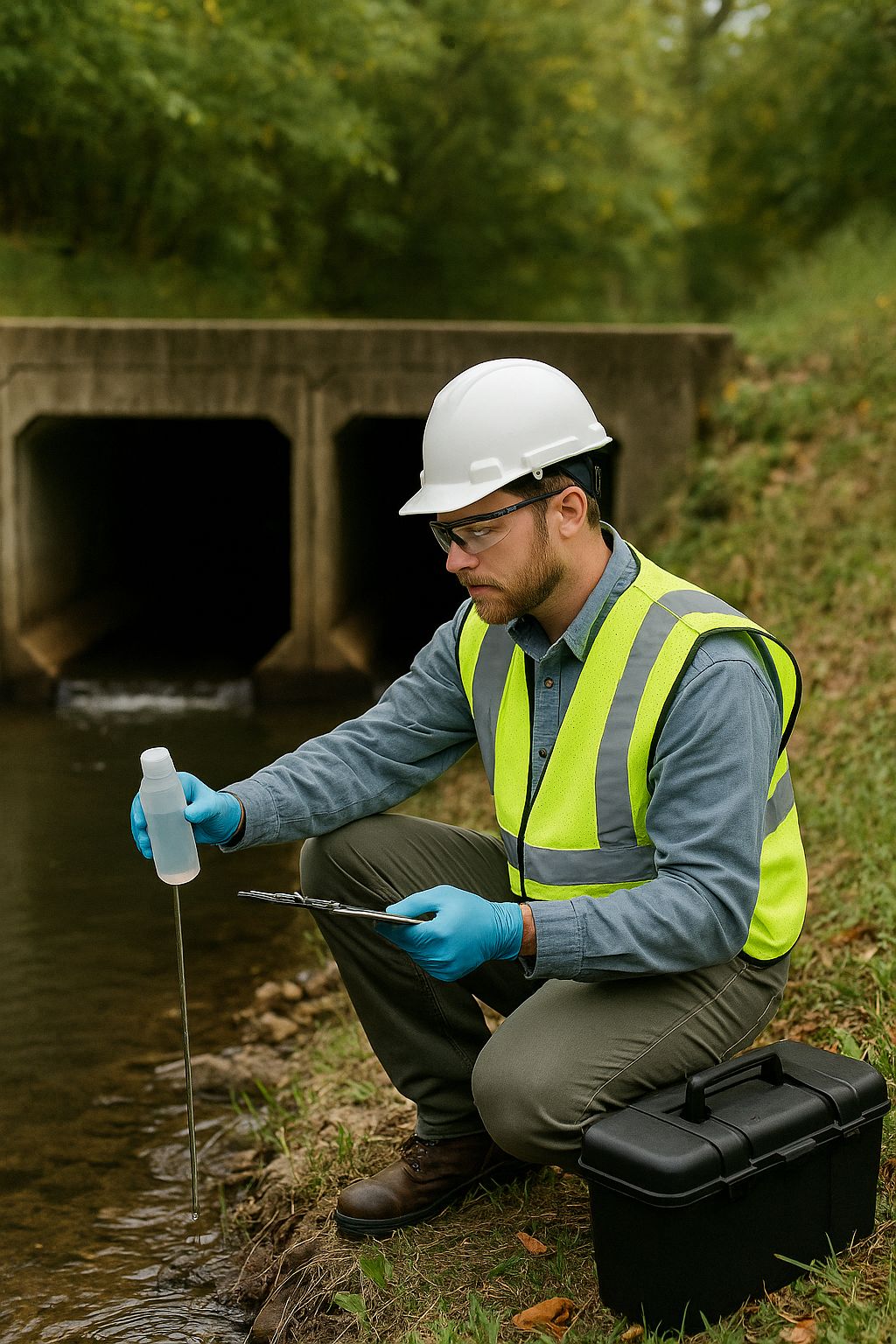
A large operator in environmental services ran several Treatment, Storage, and Disposal Facilities for hazardous waste. Each site handled a steady flow of trucks, drums, tanks, and lab work. Work moved fast. Inspectors had to spot small issues before they became big problems. The business served many industrial clients and worked under tight permits. Every shift needed the same standard of care, no matter the location.
Inspections sat at the heart of safe and legal operations. Teams walked storage areas, checked labels and dates, looked for leaks, verified secondary containment, tested emergency gear, and confirmed that records matched what was on the floor. These checks happened daily and weekly. They were not just about boxes on a form. They asked people to apply judgment in gray areas.
The rules were strict and layered. Sites operated under federal hazardous waste law known as the Resource Conservation and Recovery Act, along with state requirements. Worker safety rules applied. Transportation rules applied when loads moved on and off site. Local permits added more detail. With so many rules in play, even small wording differences could change what an inspector needed to flag.
The stakes were real and urgent:
- Missed issues could lead to spills, fires, or injuries
- Regulatory findings could bring fines or a shutdown
- Cleanups and rework drove up cost and stole time from core work
- Clients and communities expected proof that the work was done right
Running many sites raised the bar. People joined from different backgrounds. Turnover and shift changes were common. Supervisors coached in different ways. One facility might interpret a rule one way while another took a harder line. Over time, small differences became habit. This drift showed up in inspections, audits, and the way teams talked about risk.
Traditional training helped but did not close the gap. New hires watched slide decks, reviewed binders, and shadowed a seasoned inspector. These steps built basic knowledge. They did not give enough practice with tricky scenarios or show whether someone would make the right call under pressure. Leaders could not see where judgment varied across sites until an audit or incident exposed it.
The business needed a clear and shared standard, plus a way for people to practice that standard on realistic cases. It needed evidence that inspectors applied the same rules the same way. It also needed records that could stand up in an audit and help leaders coach with confidence. That is the context that shaped the learning approach that follows.
Inconsistent Inspections and Rater Drift Create Operational Risk
Across sites, inspectors often reached different conclusions when looking at the same kind of issue. One person would call a drum with a smudged label “minor.” Another would mark it “major” and stop work. A small crack in secondary containment might trigger a work order at one site and a simple note at another. These gaps showed up in daily walkdowns and in formal audits.
Rater drift was a big part of the problem. That means the standard a person uses to judge a situation slowly shifts over time. Two experienced people might start aligned, then months later one becomes stricter while the other becomes more lenient. New hires learned from whoever trained them, so the drift spread across shifts and sites.
Several forces fed the inconsistency:
- Rules were complex, and some guidance left room for judgment
- Supervisors coached in different ways, with different examples
- Turnover and schedule changes broke continuity in how people learned
- Checklists varied by site, and some were out of date
- Most practice happened on the floor, not in a safe space to test decisions
Paper forms and basic spreadsheets made it hard to compare results across locations. Notes were brief and not consistent. Leaders could not easily see patterns. They learned about gaps when a near miss, a client audit, or a regulator visit put a spotlight on them.
The operational impact was real:
- Issues went unreported or were downgraded, which raised safety risk
- Rework and cleanup cost time and money
- Audit findings were harder to contest without clear, consistent evidence
- Teams felt unsure about what “good” looked like, which slowed decisions
Traditional fixes did not stick. More slide decks added knowledge but did not build shared judgment. Spot checks helped for a week, then old habits returned. Occasional calibration meetings were useful but reached only a few people and lacked real examples that felt like the floor.
In short, the business needed a way to align how inspectors think, decide, and score. It needed a common playbook that held up under pressure and across sites, plus a clean record of how calls were made so leaders could spot drift early and coach with confidence.
The Team Chose Online Role-Plays With AI-Assisted Rubrics to Calibrate Inspections
The team needed a way for inspectors across sites to make the same call on the same kind of issue. They chose online role-plays with an AI-assisted scoring guide. Inspectors could practice real situations in a safe space, get quick feedback on each decision, and see what “good” looked like. The goal was simple. Help people notice the right details, ask the right questions, and rate severity the same way every time.
In each role-play, a learner stepped into a short scene that felt like the floor. They reviewed photos or a short clip of a storage area, read a shift note, and spoke with a virtual coworker. They chose what to check next, what to ask, and whether to stop work. The scene changed based on their choices. Nothing was abstract. Every step tied to tasks they did on a normal day.
The AI-assisted scoring guide acted like a shared yardstick. It broke the call into clear parts such as hazard ID, evidence quality, severity rating, and corrective action. It also linked each part to the right SOP step and rule. After each decision, the guide gave targeted feedback. It showed why a choice was strong or weak and pointed to the clue the learner might have missed, such as a date code, a sheen near a seam, or a drum that sat outside secondary containment.
Role-plays were short and easy to fit into a shift. Most took 10 to 15 minutes. Learners could repeat a scene to try a different path or level up to a harder version. Supervisors used the same scenes for quick huddles. Everyone trained on the same examples, which made the conversations concrete and fast.
To lock in a common standard, the team ran regular calibration rounds. People at different sites scored the same role-play during the same week. The system compared results and flagged where ratings spread out. Leads used those flags to run a brief debrief and reset expectations. When a rubric item caused confusion, designers refined the wording, added an anchor example, or updated the scene so the clue stood out more clearly.
This approach solved several pain points at once:
- Inspectors practiced tricky calls without risk to people or the environment
- Feedback arrived in the moment and showed the exact reason for each score
- Everyone used the same yardstick, which reduced drift across shifts and sites
- Leaders gained a clear record of choices and notes to guide coaching
Most important, the work felt real. Scenes used actual site photos, common waste streams, and issues pulled from past near misses. People saw themselves in the training. That buy-in made it easier to change habits and align judgment where it mattered most, on the floor during a live inspection.
We Designed Immersive Scenarios That Mirror TSDF Field Realities and SOPs
We built scenes that looked and felt like a real walk at a hazardous waste site. Every role-play followed the flow of a shift and the steps in the SOPs. Learners saw familiar spaces, tools, and signs. Choices matched the way work really happens, with noise, time pressure, and small clues that are easy to miss on a busy day.
To get the details right, we pulled from permits, SOPs, past audits, near misses, and quick interviews with floor leads. We used real site photos and short clips. We kept the language plain. If a scene showed a problem, it was one people had seen before, not a textbook image with perfect lighting.
Each scenario asked learners to do what an inspector actually does:
- Scan an area and pick the next check based on risk
- Read labels and dates and match them to what is on the floor
- Look for leaks, bulges, and signs of stress on containers and pallets
- Decide if bonding and grounding are in place before loading or transfer
- Check eyewash, fire equipment, and exits for access and status
- Write a brief evidence note and choose the right corrective action
We tied every decision back to a clear step in the SOPs. The scoring guide used anchors that showed what good looks like. For example, a “major” label issue came with a photo and a short why statement. A “minor” housekeeping miss had its own picture and fix. Learners could peek at the exact SOP step when they were unsure, which helped build the habit of checking the source, not guessing.
We covered the most common areas and pain points:
- Container storage with smudged labels, open bungs, and a wet sheen near a seam
- Tank farm checks with level readings, a damp pad by a flange, and a full sump
- Loading dock work with a missing ground clamp and a forklift path blocked by staged drums
- Waste receipt with a manifest mismatch and an unknown container that needs a hold tag
- Storm day walkdowns with lids left open, covers out of place, and runoff paths to a drain
We built three levels of difficulty. Level one focused on clear single issues. Level two mixed hazards and distractions. Level three added gray areas, like a label that was readable but half torn, or a crack that needed a closer look and a test. This let new inspectors build confidence while experienced staff sharpened judgment.
We also trained the habit of good notes. Scenes asked learners to type a short line that would stand up in an audit. They practiced naming the issue, the location, the evidence, and the action taken. If they missed a key detail, the feedback showed the exact clue they overlooked.
Each role-play took about 10 to 15 minutes and ran on a phone or a workstation. Teams used them in pre-shift huddles and in short coaching sessions. Because the scenarios mirrored daily work and followed the SOPs, people trusted them. That trust made it easier to align on what to look for, how to rate it, and what to do next.
Cluelabs xAPI Learning Record Store Centralizes Role-Play Decisions and Rubric Scores
Online role-plays gave people a safe place to practice, but leaders also needed proof and a way to spot trends across sites. The team used the Cluelabs xAPI Learning Record Store (LRS) to pull every role-play choice and score into one place. No more digging through emails or spreadsheets. One dashboard told the story for every site and shift.
The LRS captured the details that matter:
- The path each learner took through a scenario
- The evidence note they wrote to back up a call
- Rubric scores by criterion, such as hazard ID, severity, and corrective action
- Timestamps that showed pace and when help was used
With everything in one place, the team could see patterns fast. Did people at different sites give the same score to the same scene? If not, the system flagged it. If a group started to score easier or harder over time, it flagged that too. In simple terms, the LRS showed how often raters agreed and where they did not, so leaders could step in before drift became habit.
Insights turned into action right away:
- Wide score spreads on a scenario triggered a short, targeted recalibration assignment
- Confusing rubric items got an anchor example or a quick rewrite
- Repeat misses on a clue led to a brief huddle with a focused tip and a new practice run
- High performers received harder scenarios to keep building skill
The LRS also created clean, audit-ready records. Each record linked a person’s practice to the rules and SOP steps they used. Leaders could answer tough questions with confidence:
- Who is qualified to inspect container storage this month
- Show the scenarios they completed and the scores for each criterion
- Show the evidence notes they wrote and the feedback they applied
- Map these skills to the compliance items tied to permits and RCRA tasks
Completions and key milestones synced back to the LMS, so managers saw progress where they already worked. No extra logins. No manual updates.
Here is a simple example of how this helped. A “storm day walkdown” scene showed lids left open and a drain nearby. One site rated the issue minor. Another site rated it major. The LRS flagged the gap the same day. The team pushed a 10-minute refresher with two anchor photos and a clear why. The next week’s calibration showed the scores lined up.
By turning practice data into a single source of truth, the LRS gave leaders early warning on drift, clear targets for coaching, and records that stood up to audits. It kept the focus on what counts most in the field: making the right call the same way, every time.
Dashboards and Audit-Ready Records Demonstrate Competence and Compliance
Dashboards made the data easy to use. Leaders could see, at a glance, who was ready to inspect, who needed a refresher, and which sites showed drift. The view was simple and current. It focused on what people did in the role-plays, not just hours of training.
Each dashboard broke results down by site, shift, and role. It highlighted where people agreed on severity and where scores spread out. It showed which rubric items caused the most misses and how long decisions took. A quick scroll told the story of readiness and risk for the whole operation.
- Who is cleared to perform weekly container inspections today
- Which SOP steps drive the most mistakes this month
- Where rater agreement dropped after a staffing change
- Which scenarios need an update or a clearer anchor example
- Who needs a 10-minute refresher before the next shift
Behind the charts sat audit-ready records for every learner. Each record linked scenario choices to the SOP step and the rule that applied. It showed the path taken through a case, the evidence note that backed the call, and the score for each part of the rubric. Dates and times were clear. So were any follow-up actions, like a calibration session or a targeted practice run.
- Completed scenarios with version and timestamp
- Rubric scores by criterion, with feedback given
- Evidence notes as written by the learner
- Calibration results that show agreement with peers
- Mapped competencies tied to permits and RCRA tasks
When a regulator asked for proof of inspector competence, the team did not scramble for binders. They opened the dashboard, filtered by role and date, and pulled up records for the affected area. The package showed recent practice on the exact hazard in question, plus the notes and scores to back it up. The visit moved on quickly.
Client audits also got easier. Account teams could show anonymized trends to prove that standards were consistent across sites. They pointed to higher agreement on severity ratings and fewer misses on common clues like label dates, open bungs, and blocked exits. Trust grew because the data came from real decisions, not just class time.
The same data drove daily action. Wide score spreads on a scene triggered a short recalibration assignment. Repeat misses on a clue led to a quick huddle and a new practice run. As people improved, the dashboard turned from yellow to green. Time to readiness for new inspectors dropped, and leaders spent less time chasing paperwork.
In short, the dashboards and records turned practice into proof. They showed that people could make the right call, linked that skill to the rules, and kept everything in one place for audits. The result was clear evidence of competence and a stronger story of compliance.
Data Insights Trigger Targeted Recalibration and Strengthen Inter-Rater Reliability
Data from the role-plays showed where people agreed and where they did not. We used those insights to send short, targeted tune-ups that pulled raters back to the same standard. Over time, this raised agreement and cut debate on the floor.
Inter-rater reliability is simple. It is how often different people give the same score to the same situation. We tracked it by site and role. The Cluelabs LRS made it easy to see when agreement slipped and why.
Recalibration kicked off when the data showed clear signals:
- A wide spread of scores on the same scenario
- One person scoring far above or below peers
- A slow shift in scores across weeks that hinted at drift
- Many misses tied to the same clue or SOP step
- Long decision times that suggested uncertainty
We followed a simple playbook to bring everyone back in sync:
- Send a short anchor set with two or three cases and the correct “why” for each
- Ask each person to score and write a one-line evidence note
- Show the key with quick feedback that points to the exact clues
- Hold a 10-minute huddle to compare notes and align on severity
- Rescore a fresh case to confirm the standard stuck
If gaps stayed, we refined the rubric or added a clearer anchor photo. Sometimes we updated a scenario so a clue was easier to see. The goal was not to punish. It was to make the standard obvious and fair.
Here is a simple example. In a loading dock scene, some learners called a missing ground clamp “minor” if the drum was closed. Others rated it “major” because transfer could start at any moment. The LRS flagged the split. We pushed a 10-minute tune-up with two anchor photos and a direct link to the SOP step. The next run showed tight agreement.
We set a steady rhythm so reliability stayed high:
- A monthly check with a small anchor set for all inspectors
- Auto-assignments when the LRS spotted drift or a new trend
- New hires complete an anchor set before solo inspections
- Leads shadow score a few live inspections to keep training and field calls aligned
This cycle kept habits fresh. People used the same language for clues and severity. Coaching got shorter and clearer because leaders could point to a shared example. Agreement stayed high even with new staff and shift changes. Most important, inspectors made the same call the same way, which strengthened safety and compliance across sites.
Calibrated Inspections Reduce Variance and Improve Audit Outcomes Across Sites
After the rollout, inspections started to look the same across locations. The same issue got the same call. People used the same words for severity and the same fixes. Variance dropped, and audits stopped uncovering surprises that teams had missed the week before.
On the floor, teams saw practical gains:
- Faster, more confident calls on common issues like label dates and open bungs
- Cleaner evidence notes that named the issue, the spot, and the fix
- Fewer missed clues such as a sheen near a seam or a blocked exit
- Quicker escalation on problems that needed a stop and a work order
Agreement between raters improved and stayed high. The LRS tracked how tightly people scored the same scene and flagged drift early. Short tune-ups kept everyone aligned. Supervisors spent less time debating definitions and more time coaching on the next best action.
Audits changed too:
- Auditors saw a clear line from each decision to the SOP step and rule
- Repeat findings dropped as teams fixed the root cause, not just the symptom
- Corrective actions closed faster because evidence was ready on day one
- Prep time shrank since records lived in one place and were easy to filter
Operations felt the lift. Rework and cleanup dipped because issues were caught early. Shift leads did fewer last minute scrambles. New inspectors reached readiness faster, since they practiced the hard calls before they took them on the floor. The shared yardstick also made coaching feel fair, which kept morale steady through staffing changes.
Here is a simple example. A tank farm check showed a damp pad by a flange. In the past, some sites logged a note and moved on, while others stopped work. After calibration, all sites classified the case the same way, took the same immediate control, and opened the same work order. The trend held across the next several runs, which the dashboard showed at a glance.
Clients noticed the difference. Account teams could point to higher agreement on severity, steady improvement on common clues, and a living record of practice tied to rules. Trust grew because the proof came from real decisions, not only class hours.
Most important, the gains lasted. Monthly anchor sets, quick auto-assignments when drift appeared, and fresh scenarios kept the standard strong. Calibrated inspections became a habit, which cut variance and made audit outcomes more predictable across every site.
Inspectors Reach Readiness Faster With Visible Evidence of Competence
New inspectors reached readiness faster because they practiced real calls from day one and got clear feedback on each move. Online role-plays helped them spot clues, rate severity, and write strong notes. The Cluelabs LRS kept a clean record of their progress, so managers could see proof of skill, not just time spent in training.
We set a simple path to sign-off that fit into normal shifts:
- Complete a short baseline set of role-plays to see where skills stand
- Get targeted practice on the few items that need work, such as label dates or secondary containment
- Join a quick calibration round and align with peers on severity and the “why” behind each call
- Do one live shadow with a lead who uses the same rubric used in training
- Receive sign-off when the dashboard shows consistent scores and strong evidence notes
This approach saved time for both the trainee and the mentor. New hires used 10 to 15 minute sessions to build muscle memory without tying up the floor. Leads spent less time re-teaching basics and more time coaching site-specific risks. Everyone worked from the same examples and the same yardstick, which kept the bar clear and fair.
The LRS made competence visible:
- A record of completed scenarios with version and date
- Rubric scores by criterion, such as hazard ID and corrective action
- Evidence notes that show what the inspector saw and why the call made sense
- Calibration results that confirm agreement with peers
- Links to the exact SOP steps used in each decision
When a manager asked, “Is this person ready for weekly container checks,” the answer was not a guess. The dashboard showed recent practice on container storage, common misses addressed, and a clean calibration check. If a gap remained, the system queued a short refresher with anchor examples. Sign-off felt earned and clear.
Confidence also rose. Trainees saw their growth in black and white and knew what to work on next. Mentors trusted the process because the live shadow used the same rubric as training. Auditors and clients saw real decisions tied to rules, not just class hours. That trust helped new inspectors step into the role with less stress and fewer false starts.
Learning did not stop at sign-off. As inspectors gained experience, the system served tougher scenes and new hazards, such as storm day walkdowns or loading dock transfers. Records updated in the background and synced to the LMS. Career paths opened up, from basic inspections to lead roles, with proof of competence at each step.
The result was a shorter and smoother path to readiness. People learned faster, leaders had solid evidence to back decisions, and the operation gained inspectors who could make the right call the same way, every time.
L&D Leaders Gain Practical Lessons for Applying Online Role-Plays in Regulated Operations
If you lead learning in a regulated operation, here are the moves that worked and can transfer to your world. They keep training close to real work, use data to guide coaching, and create records that stand up in audits.
- Start with real work, not textbook cases. Build scenes from SOPs, permits, audits, and floor photos. Use the words people say on shift and the clues they see every day.
- Build a simple, shared rubric. Use three to five criteria and a four-point scale. Add photo anchors and a short “why” for each level so raters see the same thing the same way.
- Keep scenarios short and easy to access. Aim for 10 to 15 minutes on a phone or a workstation. Link from the LMS and post QR codes at huddle boards to remove friction.
- Use the Cluelabs LRS to turn practice into proof. Capture decisions, evidence notes, and scores in one place. Feed dashboards, map skills to permit tasks, and sync completions back to the LMS.
- Calibrate on a schedule and when data flags drift. Run monthly anchor sets for all inspectors. Auto-assign quick tune-ups when agreement drops or a clue trips many people.
- Treat data as coaching fuel, not punishment. Set a clear use policy. Focus on patterns, refine rubrics, and help people get better fast.
- Pilot small, then scale. Start with two or three high-risk tasks at one or two sites. Measure agreement and time to readiness. Fix what is clunky, then expand.
- Update fast when SOPs change. Version your scenarios, label what is current, and retire old content. Tie each decision to a specific SOP step so traceability is clear.
- Equip supervisors to coach in 10 minutes. Give them huddle guides, anchor photos, and a shared yardstick. Use the same examples in training and on the floor.
- Measure what the business cares about. Track rater agreement, time to readiness, repeat findings, rework, and time to close corrective actions. Share results in a simple monthly view.
- Plan the tech basics early. Set up single sign-on, define who can see which records, and decide how long to keep data. Keep the role-play files light for slower networks.
- Make it inclusive and reliable. Add captions and alt text. Offer translations if you have multilingual teams. Test on the devices people actually use.
The pattern is simple. Make practice feel like the job, give instant feedback, and use the LRS to spot drift and show proof. Start small, learn fast, and grow what works. The payoff is faster readiness, steadier decisions, and smoother audits.
Is This Solution A Good Fit? A Guided Conversation For Regulated Operations
The TSDF operator faced a familiar set of problems in hazardous waste operations. Inspections varied from site to site, coaching styles were different, and rater drift crept in over time. The work carried high stakes with complex rules and permits. Traditional training built knowledge but did not align judgment or create strong, audit-ready proof.
The team solved this by pairing online role-plays with an AI-assisted rubric. Inspectors practiced real situations in short sessions, saw clear feedback tied to SOPs, and used the same yardstick for severity and corrective action. Regular calibration kept people aligned across shifts and sites.
The data backbone was the Cluelabs xAPI Learning Record Store (LRS). It captured decision paths, evidence notes, and rubric scores by criterion in one place. Leaders saw where agreement was strong and where drift appeared. Dashboards triggered quick recalibration tasks. Records mapped skills to compliance items and synced progress back to the LMS. The result was steadier decisions, faster readiness, and smoother audits.
If you are considering a similar approach, use the questions below to guide your team’s discussion.
- Do your most critical tasks depend on judgment and show inconsistent calls across teams?
Why it matters: Online role-plays shine when people must read clues, weigh risk, and choose the right action. If calls vary, calibration can reduce variance and improve safety.
What it reveals: A strong fit if you see spread in severity ratings, repeat audit findings, or near misses tied to human judgment. A weaker fit if the job is already automated or purely procedural. - Can you turn real work into short scenarios and agree on a shared rubric?
Why it matters: Realistic scenes and a clear rubric make the standard visible. Without anchors and SOP links, practice will not translate to the floor.
What it reveals: A strong fit if you can gather photos, permits, and SOP steps and align on three to five scoring criteria. If SOPs are outdated or inconsistent, fix those first or run a small pilot while you clean them up. - Are your systems ready to capture and use xAPI data with an LRS?
Why it matters: The biggest gains come from data. You need an LRS to track decisions, measure agreement, and trigger recalibration. You also need device access and simple sign-on.
What it reveals: A strong fit if IT can support the Cluelabs LRS, set up SSO, and define data retention and access. If networks are slow or devices are scarce, plan for lightweight files, offline-friendly options, or shared stations. - Will leaders and supervisors make time for quick calibration and use data for coaching, not punishment?
Why it matters: The loop works when people complete monthly anchors, huddle for 10 minutes, and adjust quickly. Trust is crucial so learners engage with honest effort.
What it reveals: A strong fit if leaders can commit to a steady cadence and a clear data use policy. If time is tight or trust is low, start with a small group, show wins, and expand. - What outcomes will you measure in the first 90 days and over the next year?
Why it matters: Clear targets keep the program focused and prove value to the business.
What it reveals: A strong fit if you can baseline and track items like inter-rater agreement, time to inspector readiness, repeat findings, rework, and time to close corrective actions. If baselines are missing, run a pilot to set them before scaling.
If your answers point to high-variance, judgment-heavy work and you can support simple tech and a steady calibration rhythm, this approach is likely a good fit. Start small with two high-risk tasks, build realistic scenes, stand up the LRS connection, and measure agreement and readiness. Share early wins and grow from there.
Estimating Cost And Effort For An AI-Calibrated Inspection Training Program
This estimate focuses on what it takes to stand up online role-plays with an AI-assisted rubric and connect them to the Cluelabs xAPI Learning Record Store (LRS) for a multi-site hazardous waste TSDF operation. It groups costs by the work you will actually do, from aligning SOPs and rubrics to building scenarios, wiring up data, and keeping calibration fresh over time.
Assumptions for the example budget
- 6 sites, about 60 inspectors and 12 supervisors
- 16 short role-play scenarios that mirror high-risk and common inspection tasks
- Blended external-internal labor rate used where helpful at $135 per hour
- Year 1 includes rollout, a pilot, and a steady calibration cadence
Key cost components and what they cover
- Discovery and planning. Align scope, risks, and success metrics. Map priority inspection tasks, confirm devices and access, and set a realistic rollout plan.
- SOP and rubric alignment. Turn rules and SOPs into a clear, shared yardstick with anchors. Define criteria such as hazard ID, evidence quality, severity, and corrective action.
- Scenario design and scripting. Write short, realistic cases using site photos, permits, and audit history. Keep language plain and tie each choice to the right SOP step.
- Media capture and asset prep. Gather photos or short clips in real spaces, then edit and label assets so clues are visible and accessible.
- Role-play development and AI feedback. Build interactive flows, connect rubric items, and author targeted feedback that points to exact clues and SOP steps.
- Technology and integration. Stand up the Cluelabs LRS, map xAPI statements, and connect to your LMS with single sign-on so managers see progress where they already work.
- Data and analytics. Build simple dashboards that track agreement, drift, and readiness. Set triggers for auto-assigning tune-ups when variance appears.
- Quality assurance and compliance validation. Test scenarios on real devices, confirm accessibility, validate rubric logic, and run a quick compliance check.
- Pilot and iteration. Run a controlled trial at two sites, review data weekly, and fix rough edges before scaling.
- Deployment and enablement. Create huddle guides, quick-reference cards, and a brief supervisor workshop so coaching takes 10 minutes, not an hour.
- Change management and communications. Share the “why,” set a fair data use policy, and explain how calibration helps inspectors and audits.
- Ongoing calibration and content refresh. Push monthly anchor sets, add new scenarios for emerging risks, and keep content in lockstep with SOP updates.
- Subscriptions and optional hardware. Budget for the LRS plan that matches your data volume and any role-play authoring or simulation licenses if not already owned. Add shared tablets if floor access is limited.
- Contingency. Hold a modest reserve for new regulatory guidance, unexpected integration effort, or scene revisions after the pilot.
Effort and timeline at a glance
- Weeks 1 to 2: Discovery, SOP and rubric alignment
- Weeks 3 to 6: Scenario design, media capture, initial builds
- Weeks 5 to 8: LRS setup, xAPI mapping, LMS and SSO integration
- Weeks 7 to 8: QA and compliance checks
- Weeks 9 to 12: Pilot at two sites and iteration
- Weeks 13 to 16: Scale-up, enablement, and dashboards
Estimated costs (example only, confirm vendor pricing and internal rates; the Cluelabs LRS has a free tier for small pilots and paid plans for higher volumes)
| Cost Component | Unit Cost/Rate (USD, if applicable) | Volume/Amount (if applicable) | Calculated Cost (USD) |
|---|---|---|---|
| Discovery and Planning | $135 per hour | 105 hours | $14,175 |
| SOP and Rubric Alignment (Anchors and Severity) | $135 per hour | 64 hours | $8,640 |
| Scenario Design and Scripting | $1,875 per scenario | 16 scenarios | $30,000 |
| Media Capture — Field Days | $900 per person-day | 4 person-days | $3,600 |
| Media Capture — Travel and Site Access | N/A | Fixed | $1,200 |
| Media Editing and Asset Cleanup | $100 per hour | 24 hours | $2,400 |
| Role-Play Development and Build | $1,015 per scenario | 16 scenarios | $16,240 |
| AI-Assisted Rubric Configuration and Feedback Tuning | $135 per hour | 26 hours | $3,510 |
| LRS Setup and xAPI Mapping | $135 per hour | 36 hours | $4,860 |
| LMS and SSO Integration and Testing | $135 per hour | 20 hours | $2,700 |
| Data and Analytics Dashboards | $140 per hour | 48 hours | $6,720 |
| Quality Assurance and Compliance Validation | $130 per hour | 46 hours | $5,980 |
| Pilot and Iteration (Two Sites, Four Weeks) | N/A | Fixed | $13,680 |
| Deployment and Enablement (Huddle Guides, QRGs, Training) | $120 per hour | 50 hours | $6,000 |
| Change Management and Communications | N/A | Fixed | $4,500 |
| Cluelabs LRS Subscription (Year 1 Estimate) | $300 per month | 12 months | $3,600 |
| Simulation/Authoring Platform License (Year 1, If Needed) | $400 per month | 12 months | $4,800 |
| Ongoing Monthly Calibration and Admin (Year 1) | $1,240 per month | 12 months | $14,880 |
| Scenario Refresh Cycles (Year 1) | $2,880 per cycle | 2 cycles | $5,760 |
| Optional Hardware (Shared Tablets) | $350 per tablet | 12 tablets | $4,200 |
| Contingency (10% of One-Time Costs) | N/A | 10% | $12,420 |
| Estimated Year 1 Total (Excluding Optional Hardware) | N/A | — | $165,665 |
| Estimated Year 1 Total (Including Optional Hardware) | N/A | — | $169,865 |
How to scale up or down
- Start smaller. Pilot 8 scenarios at 2 sites to cut initial design and build by about half. The free LRS tier may cover a small pilot if data volume is low.
- Reuse anchors and media. One strong anchor library reduces scripting time on future scenarios.
- Phase integrations. Begin with basic LRS tracking and add SSO and dashboards in phase two.
- Build a local content crew. Train supervisors to capture photos and suggest scenes to lower media costs.
These figures are a planning guide. Your actual budget will reflect the number of scenarios, the state of your SOPs, how much media you capture, the depth of analytics you want, and whether you already license an authoring or simulation platform. The biggest savings come from tight scope, fast feedback during the pilot, and reusing a shared rubric and anchors across sites.