Executive Summary: To manage unpredictable weather and strict city curfews, a live event promoter in the entertainment industry implemented Personalized Learning Paths, augmented by AI-Powered Exploration & Decision Trees. The program enabled production, security, and city liaison teams to safely rehearse weather and curfew decisions in simulations—practicing hold, delay, evacuate, or cancel calls under changing conditions. As a result, the organization achieved faster, more consistent decision-making, stronger safety and compliance, and better show continuity.
Focus Industry: Entertainment
Business Type: Live Event Promoters
Solution Implemented: Personalized Learning Paths
Outcome: Rehearse weather/curfew decisions safely in simulations.
Cost and Effort: A detailed breakdown of costs and efforts is provided in the corresponding section below.
What We Worked on: Elearning custom solutions
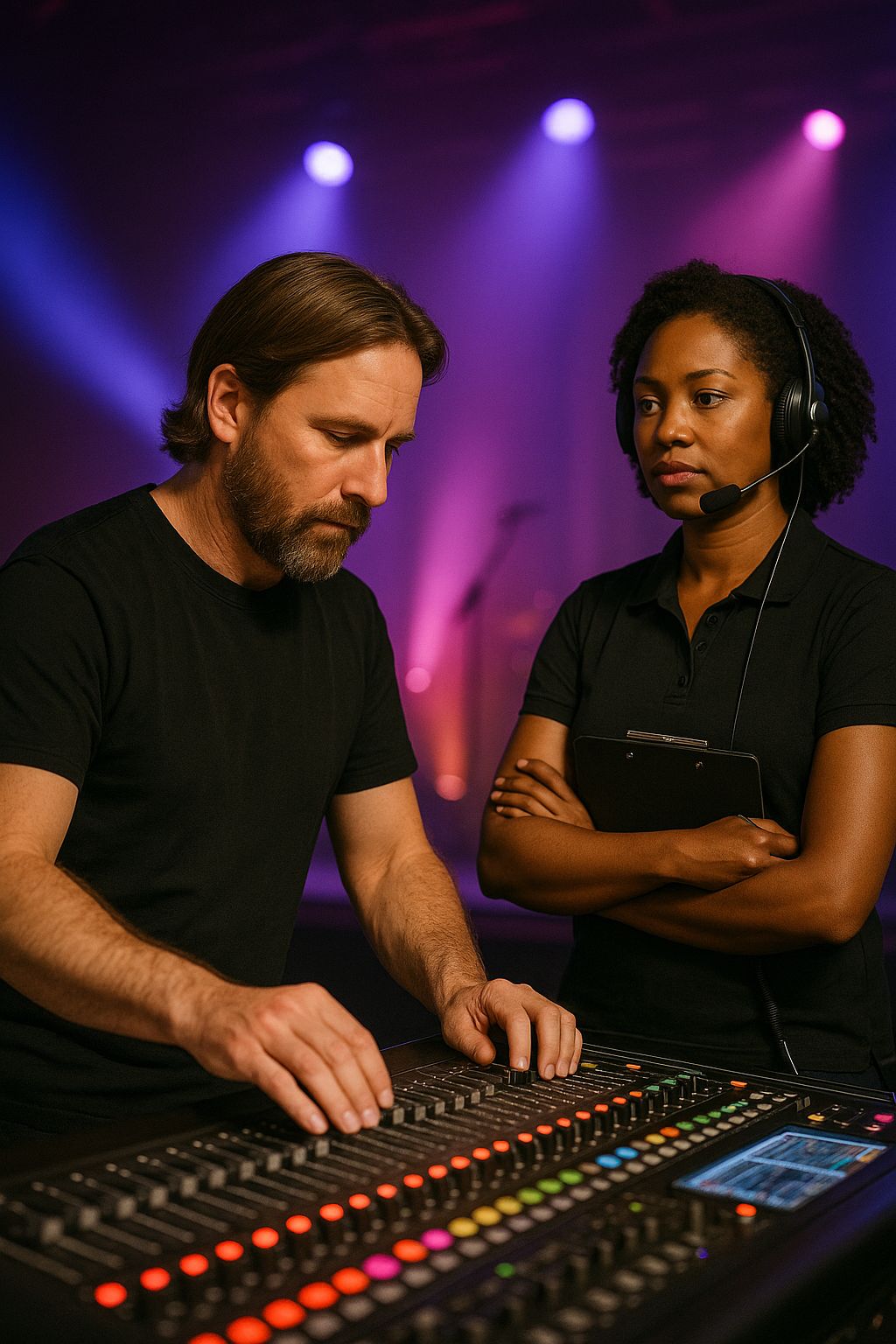
Live Event Promoters in the Entertainment Industry Operate Under High Stakes
Picture a stadium on a summer night. The crowd is buzzing, the headliner is minutes from stage, and a storm cell pops up on the radar. For live event promoters, moments like this are business as usual. They plan every detail, yet one alert or a curfew notice can flip the script. Safety comes first, but so do artist agreements, ticket promises, and tight city rules. Every decision has a clock on it, and the cost of a wrong move can be high.
Promoters sit at the center of a fast web of partners. They work with venues, production crews, security, weather teams, artists, transportation, and city officials. A call to hold, delay, or evacuate must travel across that web fast, land clearly, and guide thousands of people at once. There is almost no room for mixed signals. Fans need clear directions. Crews need safe tasks. Agencies need proof that rules are followed.
The stakes are real. A late curfew push can bring fines and angry neighbors. A slow evacuation can put fans and staff at risk. A full cancellation can trigger refunds, overtime, and travel chaos. Even a small delay can affect union time, bus routes, and stage tear-downs. On the flip side, a smart, timely call can keep people safe and save the show.
- Watch the sky and track alerts that can force a pause
- Weigh hold, delay, evacuate, or cancel against safety and rules
- Sync with police, fire, and city teams on the next step
- Signal crews, artists, and fans with clear, simple messages
- Protect gear, manage power, and reset the timeline fast
These choices land on people in specific seats. A production manager looks at staging and power. A security lead studies crowd flow. A city liaison checks curfew and permit limits. A communications lead crafts fan messages that keep calm and move people. They all have to act as one team under pressure.
That is why skill building for this field must feel real and time bound. You cannot learn these calls only by reading a policy. Teams need safe spaces to practice tough moments, see outcomes, and try again until the right habits stick. This case study starts with that reality and shows how a focused learning approach helped a promoter raise decision speed and protect both people and the show.
Unpredictable Weather and Curfew Rules Create a Complex Decision Challenge
Weather does not wait for a show to finish. A clear sky can turn in minutes. Lightning can pop within a few miles, winds can jump, or heat can push crews past safe limits. At the same time, curfews are fixed and strict. Some cities cut sound at 10 or 11 p.m. Neighborhood rules, noise limits, and transit schedules stack on top. This mix forces hard choices under a clock.
Small details shift the whole plan. A strike shows up nine miles out. The headliner has three songs left. The venue has a 30-minute lightning hold after the last strike within a set radius. Do you skip the encore, cut power to the stage, or move straight to a shelter plan? If the cell moves away, can you restart in time to beat curfew? If it stalls, who calls a full stop?
These decisions reach far beyond the stage. They touch safety, law, and money all at once. A good call keeps people safe and keeps trust with artists, cities, and fans. A slow or unclear call can do the opposite.
- Lightning or wind thresholds can force a hold or evacuation
- Heat, smoke, or air quality can limit performance and crew work
- City curfews and permits cap show time and sound levels
- Union rules and overtime kick in if delays push past set hours
- Transit last trains and ride-share surge affect exit plans
- Broadcast windows, pyro, and special effects have strict rules
The hard part is speed with incomplete information. Radar models disagree. A weather vendor gives one track while a local alert says another. Radios get crowded. Texts lag when the network is slammed. Fans need simple, calm directions. Crews need a clear chain of action. City partners need proof the plan follows policy.
Common pain points show up on big nights:
- Unclear ownership of the final call and who backs it up
- Mixed messages to fans and staff during a hold or evacuation
- Delay clocks not started or reset correctly after a lightning strike
- Confusion about which areas are safe shelters and how to route people
- Last-minute curfew math that leads to rushed or risky choices
All of this makes training tough. Teams rotate by season. New staff learn on the fly. Policies help, but reading a PDF does not build judgment in a fast, messy moment. People need to practice the calls, see what happens, and try again. They also need a shared playbook across production, security, and city liaisons so that one voice guides the crowd when it counts.
The Strategy Centers on Role-Based Paths and Scenario Practice
The training plan zeroed in on two simple ideas: teach people what matters for their job, and let them practice the real calls before show day. Each person learned the steps for their seat, then everyone came together in shared drills so handoffs stayed smooth when the clock was ticking.
The first step was to map the decision chain for weather and curfew. Who watches radar, who starts the hold timer, who speaks with the artist, who calls the city, who triggers messages to fans and crew. The team set clear thresholds for lightning, wind, heat, and curfew math, and agreed on plain words for each stage of action: monitor, hold, delay, evacuate, cancel.
Next came personalized learning paths. A short core course gave all staff the same safety rules, radio language, and crowd guidance. Then each role had its own path with targeted practice: production managers, security leads, city liaisons, communications, stage managers, and venue operations. Content stayed short and focused on real tasks.
- Five to ten minute lessons with visuals and venue maps
- Quick explainers on local policies, permits, and thresholds
- Checklists for storm prep, shelter areas, power down, and restart
- Message templates for fans and crew during holds or evacuations
- A curfew time calculator with sample run-throughs
- Timed practice drills that mirror live calls
Scenario practice tied it all together. Learners ran through branching situations that looked and felt like a show night. Conditions changed in real time, so no two runs were the same. People saw the impact of each choice on safety, rules, and the show, and could restart to try a better path.
Cross-team drills were just as important. Production, security, and city roles worked the same case from their own view, then synced in a joint run. This built trust and speed. It also exposed gaps in wording, handoffs, and timing so the playbook could improve.
- Onboarding with a baseline drill to set a starting point
- Pre-season refreshers on weather and curfew rules
- Show week micro-drills tailored to the venue map
- After-action reviews that turned show notes into the next practice set
Progress tracking stayed practical. The team watched time to first decision, correct use of thresholds, clarity of messages, and recovery time after a hold. The aim was not perfect scores. The aim was safe, confident calls made faster and in the same way across the team.
Personalized Learning Paths Drive Targeted Skill Development Across Teams
Personalized learning paths gave each person what they needed for their job and nothing extra. Everyone started with a short core on safety rules, radio language, and the chain of command. From there, the path split by role so practice felt real and useful.
The paths adapted to experience. A quick baseline check set the starting point. Newer staff got short refreshers and extra practice. Veterans skipped what they knew and jumped to tougher drills. Each run shaped the next one so time went where it mattered most.
- Production managers: power down and restart steps, stage safety, pyro holds, gear protection
- Security leads: crowd flow, gate control, shelter routing, barrier changes
- City liaisons: curfew math, permit limits, documentation, approval checkpoints
- Communications: PA copy, SMS and social posts, signage updates, tone and timing
- Stage managers: artist updates, set cuts, time calls, encore decisions
- Weather leads: lightning radius rules, hold timers, vendor coordination
AI-Powered Exploration & Decision Trees sat at the heart of practice. Each path used branching “what would you do next?” scenarios that mirrored severe-weather alerts and city curfew rules. The AI changed conditions in real time, so learners weighed hold, delay, evacuate, or cancel with the same pressure they feel on show night. After each choice, they saw how it affected safety, compliance, and show continuity, then replayed to try a better route.
Lessons stayed short and practical. Most took five to ten minutes and worked on a phone. Venue maps showed shelter zones and choke points. Timers and calculators made the rules tangible. Radio scripts and message templates kept language clear and calm. People could train during load-in, on a bus, or between meetings without losing the thread.
Paths also built the team’s shared rhythm. After role drills, cross-functional runs lined up the same scenario from different seats. Production, security, and city liaisons compared notes, synced wording, and tightened handoffs. This reduced mixed signals and shaved precious seconds off key calls.
Progress tracking focused on real outcomes. The team watched time to first decision, correct use of thresholds, message clarity, and recovery steps after a hold. Managers used simple readiness views to plan crews for the season and to spot where to coach next. The goal was steady gains in safe, consistent decisions across the whole operation.
AI-Powered Exploration and Decision Trees Power Real-Time Branching Scenarios
The heart of practice was an AI tool that let people walk through branching “what would you do next?” situations. It sat inside each role’s path, so the scenarios matched real duties. Learners faced severe weather alerts, lightning thresholds, and city curfew rules, then made the same calls they would on a show night. The AI changed conditions in real time and pushed new choices based on each move.
Every run felt like a live shift. A radar alert might tighten the lightning radius. A wind gust might force a stage check. A clock ticked toward curfew. Learners had to decide whether to hold, delay, evacuate, or cancel. Each choice came with clear effects on safety, compliance, and the show plan.
Here is a sample moment. Lightning is detected at 7.5 miles. A 30 minute hold is required after the last strike. It is 10:20 p.m. and the curfew is 11. The headliner has two songs left. Do you skip to the closer and hope to beat the clock if the storm moves on, or do you move to shelter now and document a full stop? The tool plays out both paths so people can see what follows.
Feedback arrived fast. After each branch, the scenario showed why a call worked or not. Learners saw if they used the right thresholds, if the hold timer reset, and how long it took to communicate. The debrief offered tips, a short rule recap, and a chance to try again. This helped build judgment that sticks.
Teams could also run the same case from different seats. Production watched gear and power. Security watched gates and routes. City liaisons watched permits and curfew math. A joint run pulled them together and tested handoffs and radio language. It revealed gaps in wording and timing that are easy to miss on paper.
- Dynamic prompts that adjust to new weather inputs and time pressure
- Timers, thresholds, and curfew calculators that make rules concrete
- Role views that focus attention on the tasks that matter most
- Practice writing and delivering fan and crew messages in plain language
- Instant debriefs with suggested next tries and links to quick refreshers
Repetition was key. Learners replayed the same scenario to test a new choice and watched the outcome change. As they improved, the tool raised difficulty with tighter clocks or trickier maps. People trained in short bursts on a phone or laptop, which fit the pace of event work.
The platform also logged simple, useful data. The team tracked time to first decision, correct use of thresholds, curfew math accuracy, message clarity, and recovery steps after a hold. Managers used this view to plan coaching and to prepare crews for high risk shows.
The Rollout Builds Confidence Through Repetition Feedback and Cross-Functional Alignment
The team rolled out the program in stages that fit the show calendar. Leaders opened with a clear message: keep people safe, make faster calls, and protect the show when weather or curfews tighten the window. A short kickoff gave everyone a taste of the practice tool, set shared language, and showed how each role would train on what matters most.
On day one, each person took a quick baseline run to set a starting point. Then they chose a role path and got a simple plan for the next few weeks. Everything worked on a phone and loaded fast, so crews could train during load-in or on the way to the venue.
The program used a simple cadence:
- Week 0: 20-minute intro and a baseline scenario
- Weeks 1–6: one or two 10-minute role drills with real venue maps
- Twice a month: a 30-minute cross-team scenario with production, security, and city liaisons
- Event week: a 5-minute lightning and curfew check tied to the venue plan
- After each show: an 8-minute review that fed notes back into the next drill
Repetition and fast feedback did the heavy lifting. AI-Powered Exploration & Decision Trees gave an instant debrief after each choice. Learners saw if they used the right thresholds, if the hold timer reset, and how long it took to inform crews and fans. A quick recap suggested a better next try, and a single tap restarted the run so people could practice the fix right away.
Managers kept coaching light and useful. They reviewed a simple readiness view that highlighted time to first decision, curfew math accuracy, and message clarity. Short huddles focused on one skill at a time, like starting the hold clock or reading a radar update out loud in plain language.
Cross-functional alignment was a core part of the rollout. Teams practiced the same case from different seats, then synced up in a joint run. Shared words like “monitor,” “hold,” “delay,” “evacuate,” and “cancel” kept radios clear. Message templates for PA, SMS, and social posts kept tone steady. City partners joined tabletop runs so everyone agreed on thresholds and who makes the final call.
Adoption grew because the plan respected real work. Lessons were short, mobile-first, and easy to pick up between tasks. Field champions helped crews start fast and answered questions. Shout-outs in crew briefings recognized safe, fast decisions and clear messages. Feedback from shows went straight back into new scenarios, so training stayed current with venues, maps, and local rules.
By season’s midpoint, practice felt like part of the job. People knew the playbook, spoke the same language, and trusted the process. Most important, they were calmer and quicker when the sky changed or the clock got tight.
The Program Delivers Faster Decisions Stronger Compliance and Better Show Continuity
After the rollout, crews made faster, clearer calls when the sky turned or the clock ran short. Regular practice in the AI-powered branching scenarios built pattern recognition and calm under pressure. People knew the thresholds, used the same words, and moved in sync. The result was quicker action, fewer mixed messages, and smoother nights.
The gains showed up where it counts: on safety, rules, and the show. Scenario data and after-action reviews pointed to steady progress, and the team used those insights to sharpen drills and update playbooks before the next event.
- Faster decisions: time to start a hold or trigger a delay dropped as people recognized risky patterns sooner
- Consistent rules: teams applied lightning radius, wind, heat, and curfew thresholds the same way across venues
- Cleaner curfew math: set cuts and encore choices lined up with the time left, which reduced last-minute scrambles
- Quicker restarts: recovery steps after an all-clear got tighter, so more shows resumed safely and on time
- Stronger messages: PA, SMS, and social posts matched, which kept fans calm and moving in the right direction
- Better crowd flow: security routed people to the right zones and avoided choke points more often
- Show continuity: fewer full cancellations and more partial holds that still reached a solid finish
- Lower risk and cost: earlier power downs protected gear, and smarter timing helped control overtime
- Faster onboarding: seasonal staff reached readiness sooner with short, targeted drills
- Higher confidence: radio traffic sounded calmer, and teams trusted the process when pressure rose
These results came from steady repetition, instant feedback, and cross-team practice that mirrored real life. Personalized paths kept learning tight and relevant. AI-Powered Exploration & Decision Trees let people test choices without risk, see consequences right away, and try again until good habits stuck. In a field where minutes matter, that practice paid off on show night.
Learning and Development Teams Gain Clear Lessons for High-Stakes Environments
For learning teams, the big takeaway is simple. High-stakes jobs need practice that feels like the real moment, not just a policy review. People learn best when they can try a call, see what happens, and try again without risk. That is what turned stressful nights into steady, coordinated action.
- Start with the hot moments. Map the few decisions that make or break the night and build training around them
- Make roles crystal clear. Define who watches weather, who starts the hold clock, who talks to the artist, who calls the city, and who speaks to fans
- Give everyone a short shared core, then split into role paths so time goes to the skills that matter most
- Keep lessons short and mobile. Five to ten minutes with venue maps, checklists, and plain radio language beats long modules
- Use AI-Powered Exploration & Decision Trees to run branching scenarios that change in real time and show consequences right away
- Make rules tangible. Add timers, lightning radius checks, curfew calculators, and clear thresholds inside practice
- Drill together across functions. Run the same case from different seats, then sync in a joint run to tighten handoffs and wording
- Close the loop fast. Turn show notes into the next scenario and update scripts and checklists as rules evolve
- Measure a few field metrics. Track time to first decision, threshold accuracy, message clarity, and restart time after a hold
- Build confidence with repetition. Encourage retries and celebrate clear, calm calls, not just perfect scores
- Use champions in the field. Pick trusted leads to model the drills and keep momentum between events
- Include partners early. Invite venue ops, city contacts, and safety teams to shape thresholds and language
- Provide job aids for show night. Offer quick checklists, message templates, and a simple decision tree at the radio cart
- Design for real life. Support low bandwidth, phone screens, and short windows between tasks
These moves travel well to other high-pressure settings like transit, healthcare operations, energy, and manufacturing. Start small. Pick one critical decision, build a short branching scenario, run it with a cross-functional group next week, and track two numbers. Improve and repeat. The gains stack fast when minutes matter.
Guiding the Fit Conversation for Personalized Paths and AI-Driven Scenarios
For live event promoters, fast calls under changing weather and hard curfews can make or break the night. The solution paired Personalized Learning Paths with AI-Powered Exploration & Decision Trees to tackle that pressure head-on. Crews practiced the exact choices they face—hold, delay, evacuate, or cancel—while conditions shifted in real time. Each role learned its part, then teams synced in shared runs so handoffs stayed tight. Quick debriefs showed what worked, what did not, and how to try a better move right away.
This approach solved the industry’s toughest pain points: slow or uneven decisions, mixed messages to fans and staff, curfew math mistakes, and unclear ownership. Role-based paths kept learning focused and short. Mobile access fit the event schedule. Scenario results rolled up into simple field metrics like time to first decision, threshold accuracy, message clarity, and restart time. Leaders used those insights to coach and to prove impact.
Use the questions below to decide if a similar program fits your world.
- Are our high-stakes decisions frequent, time-critical, and ambiguous?
This matters because the solution shines when minutes matter and the wrong call carries real risk. It uncovers whether scenario practice will change outcomes. If those moments are rare or fully scripted, job aids or simple refreshers may be enough. If they are common and fluid, adaptive scenarios can build calm, fast judgment. - Can we define clear ownership, thresholds, and a single chain of command?
This matters because branching scenarios depend on clear triggers and roles. It uncovers gaps in how decisions get made. If ownership or thresholds are fuzzy, fix them first or use a small pilot to settle them. With clarity in place, training will standardize how people act and speak. - Will cross-functional partners train together on a regular schedule?
This matters because real events demand tight handoffs between production, security, venue ops, and city contacts. It uncovers whether you have buy-in and time for short, repeated practice. If teams cannot meet, fold micro drills into pre-shift checks or invite partners to a monthly tabletop. Without shared runs, you risk slower calls and mixed messages. - Do we have the assets to make scenarios real and safe?
This matters because realism drives on-the-job results. It uncovers whether maps, local policies, vendor thresholds, and message templates are current and approved. If they are missing or vary by site, plan a short sprint to gather and align them. Without this base, scenarios feel generic and trust drops. - Can we capture a few simple metrics and use them to improve?
This matters because feedback turns practice into performance. It uncovers whether you can track time to first decision, threshold accuracy, message clarity, and restart steps. If you lack tools, start with a light form or a basic log. Without data, you cannot prove value or tune the next run.
If you answer yes to most of these, start with a small pilot on one critical decision at one venue. Use Personalized Learning Paths for core rules and role skills, then add AI-Powered Exploration & Decision Trees for a few high-risk scenarios. Track two field metrics and one adoption metric. Improve for two cycles, then scale.
Estimating Cost and Effort for Personalized Paths and AI‑Driven Scenarios
This estimate outlines the budget and effort to implement a program that combines Personalized Learning Paths with AI-Powered Exploration & Decision Trees for live event promoters. The goal is to let teams practice weather and curfew calls safely, build consistent decision habits, and tighten cross-team handoffs.
Assumptions used for this estimate (adjust to fit your context):
- 6 key roles (production, security, city liaison, communications, stage management, weather lead)
- 250 learners in scope for a first-season rollout
- 8 venues/cities for initial localization
- 1 shared core lesson, 18 role lessons (3 per role), 12 branching scenarios
- 6-month pilot season using existing LMS; add LRS only if needed
Key cost components explained
- Discovery and Planning: Stakeholder interviews, decision-mapping for weather and curfew, policy and permit collection, and a clear RACI for final calls. Produces a shared playbook and scope.
- Design and Storyboarding: Learning architecture, role-based paths, scenario blueprints, venue map overlays, radio language, and job-aid outlines. Sets the backbone for consistent content.
- Content Production: Short core and role lessons, branching scenarios in the AI tool, venue map digitization, message templates, checklists, and simple tools like a curfew calculator and hold timer.
- Technology and Integration: AI scenario tool licensing for the pilot season, LMS packaging and launch, and SSO setup to keep access simple in the field.
- Data and Analytics: Light analytics configuration to track time to first decision, threshold accuracy, message clarity, and restart steps; optional LRS subscription if your LMS lacks the needed detail.
- Quality Assurance and Compliance: Cross-device and bandwidth testing, accessibility checks, accuracy validation on thresholds and timers, and brief legal/policy review.
- Pilot and Iteration: Facilitation for a 4-week pilot, collection of feedback, and content tuning based on after-action notes.
- Deployment and Enablement: Champion training, crew kickoffs, comms assets, and packaging/upload. Keeps adoption high without pulling people off the floor for long sessions.
- Change Management: A simple adoption plan, stakeholder roadshows, and light incentives or recognition to build momentum.
- Support and Maintenance (First Season): Scenario and content updates as venues or rules change, along with help desk and admin coverage.
- Venue/City Localization Packs: Tailoring scenarios, maps, and thresholds for each site so practice reflects real routes and rules.
- Weather/Curfew Rule Library: A validated reference of lightning radii, hold timers, wind/heat limits, and city curfews that drives consistency across teams.
| Cost Component | Unit Cost/Rate (USD) | Volume/Amount | Calculated Cost |
|---|---|---|---|
| Discovery and Planning | $145/hour | 120 hours | $17,400 |
| Design and Storyboarding | $145/hour | 100 hours | $14,500 |
| Core Microlearning Lesson | $1,200/module | 1 module | $1,200 |
| Role Microlearning Lessons | $1,200/module | 18 modules | $21,600 |
| Branching Scenario Authoring | $1,800/scenario | 12 scenarios | $21,600 |
| Job Aids (Checklists, Templates) | $250/item | 12 items | $3,000 |
| Curfew Calculator and Hold Timer | $3,000/deliverable | 1 deliverable | $3,000 |
| Venue Map Digitization | $400/venue | 8 venues | $3,200 |
| AI Scenario Tool Pilot License (Estimate) | $10,000/license | 6-month pilot | $10,000 |
| LMS Integration and Packaging | $3,000/fixed | 1 setup | $3,000 |
| SSO Setup | $1,500/fixed | 1 setup | $1,500 |
| Analytics Configuration and Dashboards | $145/hour | 24 hours | $3,480 |
| LRS Subscription (If Needed) | $200/month | 6 months | $1,200 |
| Functional and Device QA | $100/hour | 80 hours | $8,000 |
| Accessibility Review and Fixes | $100/hour | 24 hours | $2,400 |
| Legal/Policy Compliance Review | $200/hour | 10 hours | $2,000 |
| Pilot Facilitation and Coaching | $145/hour | 40 hours | $5,800 |
| Post-Pilot Content Iteration | $145/hour | 30 hours | $4,350 |
| Champion Training Sessions | $1,000/session | 4 sessions | $4,000 |
| Crew Kickoff Webinars | $800/webinar | 2 webinars | $1,600 |
| Comms Assets (Emails, Posters, Scripts) | $2,000/fixed | 1 set | $2,000 |
| Packaging and Upload to LMS | $1,500/fixed | 1 set | $1,500 |
| Change Management Plan and Roadshows | $145/hour | 24 hours | $3,480 |
| Incentives/Gamification Setup | $1,500/fixed | 1 set | $1,500 |
| Support: Content Updates and Tuning (6 Months) | $125/hour | 120 hours | $15,000 |
| Support: Help Desk and Admin (6 Months) | $500/month | 6 months | $3,000 |
| Venue/City Localization Packs | $750/venue | 8 venues | $6,000 |
| Weather/Curfew Rule Library Build | $3,500/fixed | 1 set | $3,500 |
| Total Estimated Investment (First Season) | $168,810 |
Effort and timeline: A focused pilot typically runs 10–14 weeks from discovery to go-live for two venues, then scales across remaining venues in 4–6 more weeks. Expect a core team of an L&D lead, one instructional designer, one scenario author/developer, a safety or operations SME, one QA resource, and a project manager. During the season, plan 2–4 hours per week for updates.
Cost levers you can pull:
- Start with fewer scenarios (6–8) and add more after the pilot
- Reuse existing venue maps and job aids where possible
- Use internal champions to deliver kickoffs and coaching
- Batch localization by region to reduce one-off edits
- Delay LRS subscription if LMS analytics meet your needs
All figures are planning placeholders to help scope effort and budget. Actuals will vary by vendor pricing, internal rates, and how many venues, roles, and scenarios you select for the first season.